

How a Valgus Unloader Brace Works for Medial Knee Osteoarthritis

Updated: Nov 9
A valgus unloader knee brace is designed to reduce loading in the medial, or inner, compartment of the knee by applying an external valgus-directed force.
In a knee with medial-compartment osteoarthritis and varus alignment, the brace uses a three-point force system to create an external abduction, or valgus, moment. This can reduce the knee adduction moment and shift some load away from the medial compartment toward the lateral side.
A valgus unloader brace is therefore different from a general hinged knee brace. A hinged brace primarily provides structural side-to-side stability, while an unloader brace is designed to change how load is distributed across the knee joint.
Whether unloading is appropriate depends on the osteoarthritis compartment pattern, alignment, symptoms, stability, activity level, fit, and treatment plan.

How Does a Valgus Unloader Knee Brace Work for Medial Knee Osteoarthritis?
Medial-compartment knee osteoarthritis often occurs with a varus, or bow-legged, alignment pattern that places more of the knee’s load through the inner tibiofemoral compartment.
A valgus unloader brace applies an external force in the opposite direction. The brace typically uses a three-point pressure system with forces above, at, and below the knee to create a valgus-directed moment.
This can reduce the knee adduction moment and shift part of the load away from the medial compartment during weight-bearing activities such as walking.
The goal is targeted load redistribution rather than simply holding the knee more rigidly.
What Does “Valgus-Directed Unloading” Mean?
“Valgus-directed unloading” means that the brace applies an external force that encourages the knee away from a varus, or bow-legged, loading pattern.
For medial-compartment osteoarthritis, this force is intended to reduce the amount of compressive load passing through the inner side of the knee.
The brace does not permanently realign the leg. Instead, it changes the mechanical forces acting across the knee while the brace is being worn.
How Does the Three-Point Force System Work?
Many valgus unloader braces use a three-point force system.
One corrective force is applied near the knee, while opposing forces are applied above and below the joint. Together, these forces create an external valgus, or abduction, moment.
For medial-compartment osteoarthritis, the purpose is to reduce the knee’s external adduction moment and decrease loading through the medial compartment during weight-bearing activity.
Is Valgus Unloading Used for Medial or Lateral Knee Osteoarthritis?
A valgus unloader brace is generally associated with medial-compartment knee osteoarthritis because the valgus-directed force is intended to reduce loading on the inner side of the knee.
For lateral-compartment osteoarthritis, the unloading direction is typically reversed. A varus-directed unloader brace may be considered to reduce loading through the lateral compartment.
This distinction matters because the direction of unloading should match the compartment that is being targeted.
Valgus Unloader Brace vs Hinged Knee Brace: What Is the Difference?
Feature | Valgus unloader brace | General hinged knee brace |
Primary goal | Targeted load redistribution | Structural stability |
Typical OA use | Medial-compartment OA | OA with instability or broader support needs |
Main mechanism | External valgus/abduction moment | Hinges limit unwanted side-to-side movement |
Changes compartment loading | Designed to | Not primarily |
Best fit when | Compartment-specific unloading is relevant | Instability is a major concern |
Automatically appropriate for all OA | No | No |
A hinged brace and a valgus unloader brace may both contain hinges, but their intended support mechanisms are different.
Who May Be a Candidate for a Valgus Unloader Brace?
A valgus unloader brace may be worth comparing when knee osteoarthritis is predominantly located in the medial tibiofemoral compartment and targeted load redistribution is part of the treatment goal.
Other factors may include:
varus alignment;
activity-related medial knee pain;
preserved function in the opposite compartment;
ability to tolerate and fit the brace properly;
absence of a conflicting condition; and
a treatment plan that includes non-operative support.
Not everyone with medial knee osteoarthritis will respond the same way to valgus bracing. Individual response can vary based on anatomy, alignment, fit, activity, and disease pattern.
When May a Traditional Valgus Unloader Be Less Appropriate?
A traditional valgus unloader brace may be less appropriate when osteoarthritis involves multiple compartments, the primary problem is instability rather than compartment-specific loading, or the brace cannot be fitted or tolerated effectively.
People with tricompartmental osteoarthritis, significant patellofemoral involvement, complex instability, or broader support needs may require a different brace-selection discussion.
The osteoarthritis pattern should therefore be identified before assuming that targeted medial unloading is the best support strategy.
How Is a Traditional Valgus Unloader Different From a TCO-Style Knee Brace?
A traditional valgus unloader brace is primarily designed to redistribute load away from one affected tibiofemoral compartment, most commonly the medial compartment.
A TCO-style knee brace is better understood as a broader structured-support category that may be considered when the support need extends beyond a single-compartment unloading goal, such as multi-compartment osteoarthritis, instability, alignment-related loading, or overlapping support requirements.
A TCO-style brace should not be presented as automatically superior to a traditional unloader. The appropriate category depends on the osteoarthritis pattern, stability needs, activity, fit, and treatment goals.
Key Takeaways
A valgus unloader brace alleviates pain from medial compartment osteoarthritis.
It redistributes weight, promoting proper knee alignment and stability.
Suitable for athletes and older adults.
It offers a non-invasive solution to manage knee pain.
Can improve overall mobility without surgery.
What Is a Valgus Unloader Brace?
A valgus unloader brace is a special type of knee brace. It is designed to alleviate pain associated with knee osteoarthritis. By applying a gentle force, the brace promotes proper knee alignment.
These braces specifically target the medial compartment of the knee. This area is where osteoarthritis often causes the most damage. The brace redistributes pressure away from the affected region, reducing pain.
Valgus unloader braces come in various designs. They include custom-fitted and off-the-shelf options. Here are the key components of a typical brace:
Adjustable straps
Hinges for flexibility
Lightweight materials
Using a valgus unloader brace can help delay the need for surgery. It's a non-invasive treatment that integrates well with physical therapy and medication. Understanding its components and purpose is crucial for anyone considering this type of knee support.

How Does a Valgus Unloader Knee Brace Work?
Valgus unloader knee braces function by redistributing the pressure on the knee joint. Specifically, they shift the weight away from the damaged area. This helps reduce pain and discomfort in the medial compartment.
The brace achieves its effect by applying an external force. This force gently pushes the knee into a healthier alignment. The correct alignment reduces stress on the affected part of the knee.
Here's how the brace operates:
Realigns the knee joint
Minimizes strain on damaged cartilage
Enhances stability during movement
Improves knee joint function
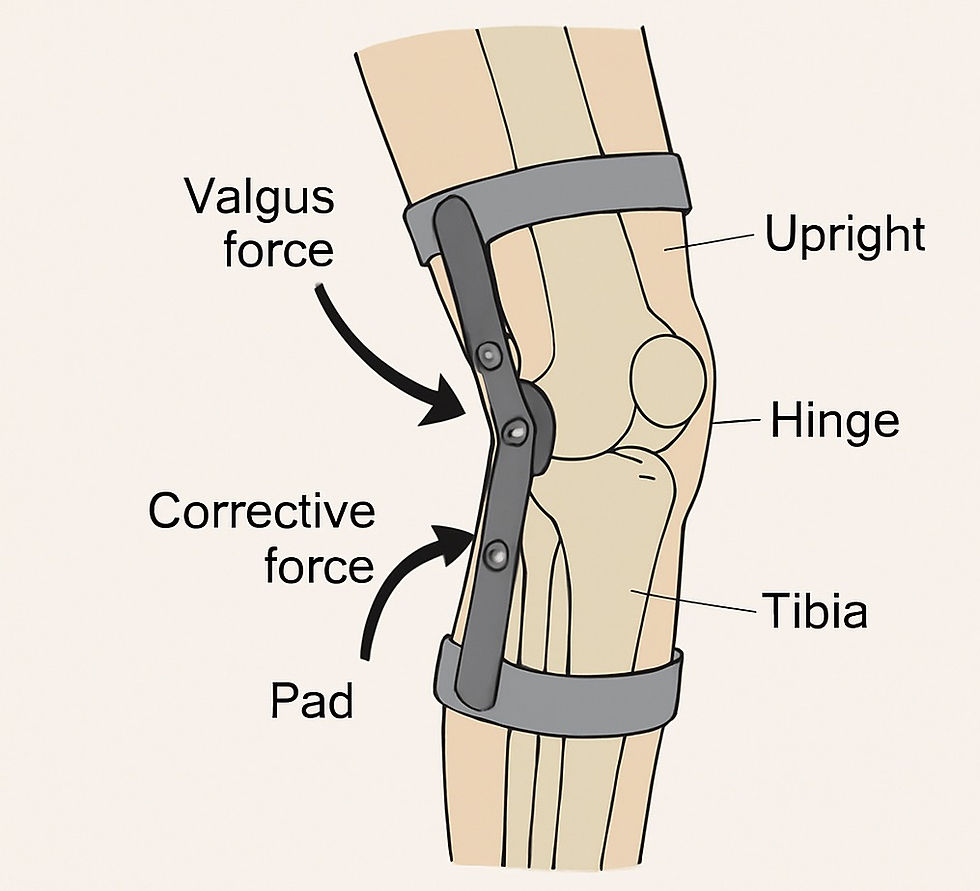
By guiding the knee to its proper alignment, the brace aids in pain reduction. This improvement leads to better mobility and a more active lifestyle. Users often find relief in daily activities such as walking and climbing stairs.
Continued brace use helps maintain these benefits. For best results, it's important to follow a healthcare provider's advice. They can ensure that the valgus unloader brace fits well and functions effectively.
Who Should Use a Valgus Unloader Brace?
Valgus unloader braces are ideal for people with medial compartment knee osteoarthritis. This condition often causes pain and stiffness due to uneven knee joint loading. A valgus unloader brace effectively alleviates these symptoms.
Athletes with knee alignment issues may also benefit. The brace supports knee stability during physical activity. It can help prevent further injuries or exacerbation of existing conditions.
In addition to these groups, older adults are good candidates for valgus unloader braces. They often experience knee pain and may not be suitable for surgery. The brace offers a non-invasive alternative to manage pain and improve mobility.
Here are common users:
Individuals with osteoarthritis
Athletes needing extra knee support
Seniors avoiding knee surgeries
Valgus unloader braces are versatile. They provide relief across different lifestyles. Consult a healthcare provider to see if a valgus unloader brace suits your needs.
Key Benefits of Valgus Unloader Knee Braces
Valgus unloader knee braces offer significant relief for those managing knee osteoarthritis. By redistributing load, they ease pain and enhance mobility. Users often experience improved quality of life and increased activity levels.
These braces serve as a non-surgical option for pain management. They delay the need for invasive procedures like knee replacement. This can be especially beneficial for those seeking to avoid or postpone surgery.
Valgus unloader braces also promote better knee alignment. Proper alignment reduces stress on the joint and can help in slowing the progression of osteoarthritis. This can result in fewer complications and a healthier knee joint over time.
Wearing a valgus unloader brace consistently has several advantages:
Reduces knee pain
Supports joint function
Enhances mobility and activity levels
Minimizes the need for surgery
In summary, valgus unloader knee braces can significantly impact pain management and mobility. They provide a practical solution for maintaining an active lifestyle, despite knee issues.
Understanding how valgus unloader knee braces can relieve pain may guide you to the right support. Consider options that suit your individual needs.
Types of Valgus Unloader Braces
Valgus unloader braces come in various types to cater to different needs. Choosing the right type depends on your specific condition and lifestyle. Understanding the options can help you make an informed decision.
Custom-fitted braces offer a personalized fit. They are crafted to align precisely with your leg’s contour. This ensures optimal comfort and effectiveness in reducing knee pain.
Off-the-shelf braces are another popular choice. They are pre-made, typically adjustable, and provide a versatile solution for many users. These are ideal if you need a quick and economical option.
Some key types include:
Custom-fitted braces
Off-the-shelf adjustable braces
Hinged knee braces
Each type has its benefits, so consult with a healthcare provider. They can help you select the brace that best meets your individual requirements.
How to Choose the Right Knee Unloader Brace
Choosing the right knee unloader brace requires careful consideration of several factors. It's important to assess your specific knee condition to ensure you select the most suitable option for your needs. Consulting with a healthcare professional is an essential first step.
Consider your activity level when selecting a brace. If you're highly active or an athlete, you might require a more robust brace. For everyday wear, comfort and ease of use might be your top priorities.
Key factors to consider include:
Your level of physical activity
Type and severity of knee condition
Comfort and material of the brace
by Mastars (https://unsplash.com/@mastars)
Always try on a brace before purchasing it to check for fit and comfort. A well-fitted brace will enhance your movement and relieve pain effectively. Don't hesitate to ask for adjustments or alternative options if you're not satisfied.
Fitting, Adjustment, and Proper Use
Proper fitting is crucial for a valgus unloader brace to be effective. An incorrectly fitted brace may fail to relieve knee pain or could even cause discomfort. It's essential to have it adjusted by a knowledgeable healthcare provider.
Adjusting the brace is often straightforward but requires attention to detail. Ensure the straps are snug but not too tight, allowing for a range of motion without slippage. Always follow the manufacturer's fitting instructions for optimal results.
To get the best use out of your brace, maintain these practices:
Regularly inspect for wear and tear
Clean it according to instructions
Consult your doctor for periodic adjustments
by McGill Library (https://unsplash.com/@mcgilllibrary)
By adhering to these tips, you enhance the brace's longevity and efficacy. Proper usage and care ensure that the brace continues to support your knee health over time.
Common Questions and Concerns
When considering a valgus unloader brace, people often have various questions. One common concern is whether the brace will limit daily activities. Thankfully, most braces are designed to be worn during activities like walking and running.
A frequent question relates to comfort. New users may experience some discomfort initially. This usually fades as they adjust to the brace. To mitigate discomfort, follow fitting instructions carefully and consult a healthcare provider for adjustments.
Here are common concerns and answers:
Will it restrict movement? Typically, no, the brace promotes natural motion.
Can I wear it under clothes? Yes, most designs are discreet.
Is it covered by insurance? Check with your provider for details.
Addressing these concerns can help individuals make informed decisions about brace use. If uncertainty persists, consulting a healthcare professional is advised.
Valgus Unloader Brace vs. Other Knee Braces
Valgus unloader braces are specifically designed to treat medial compartment knee osteoarthritis. They differ from other knee braces in their ability to redistribute the load. By directing force away from the knee's damaged area, they provide targeted relief from pain.
In comparison, other types of knee braces serve different purposes. Here are some distinctions:
Knee sleeves: Offer compression, not unloading.
Patellar tracking braces: Focus on knee cap alignment.
Hinged braces: Provide support post-surgery or for ligament injuries.

by CHUTTERSNAP (https://unsplash.com/@chuttersnap)
Understanding the distinctions between these braces ensures that individuals select the most suitable one for their unique needs. A consult with an orthopedic specialist can further clarify these options.
Not sure which brace is right for you? Compare the BCI Valgus Unloader Brace with other options to find the best fit for your knee health.
Tips for Getting the Most Out of Your Valgus Unloader Knee Brace
Maximizing the benefits of your valgus unloader knee brace requires proper use and care. Consistency in wearing the brace is essential, especially during activities that place stress on your knees.
Here are some tips to enhance your experience with the brace:
Follow fitting instructions: Ensure a snug but comfortable fit.
Regular maintenance: Clean the brace as advised by the manufacturer.
Combine with exercise: Engage in recommended physical therapies.
These steps can help enhance comfort, effectiveness, and overall knee health.
What Does Research Show About Valgus Unloader Braces?
Biomechanical studies show that valgus unloader braces can reduce the knee adduction moment and medial-compartment loading during weight-bearing activity.
Clinical studies have also reported improvements in pain and function for some people with medial-compartment knee osteoarthritis.
However, response is variable, and the amount of unloading achieved depends on factors such as brace design, alignment setting, fit, activity, and individual biomechanics.
Evidence for the brace category should not be interpreted as proof that every individual or every specific product will achieve the same outcome.
Conclusion: Is a Valgus Unloader Brace Right for You?
Choosing a valgus unloader brace depends on your specific knee condition and lifestyle needs. It offers a non-invasive way to reduce pain and improve mobility in cases of knee osteoarthritis.
Always consult with a healthcare professional to ensure it's the best option for your situation. A custom treatment plan with a brace can greatly improve your life. It helps you stay independent and active.
As you weigh your options for managing knee pain, consider the BCI Valgus Unloader Brace for enhanced comfort and mobility.
Evidence Behind This Guide
What current research indicates
Valgus unloader braces are designed to reduce loading in the medial tibiofemoral compartment by applying an external valgus or abduction moment. Biomechanical studies show reductions in knee adduction moment and medial-compartment loading during walking and other weight-bearing tasks.
What this means for brace selection
Targeted unloading is most relevant when osteoarthritis is predominantly compartment-specific and the support goal is to reduce load through that compartment. It should not be assumed that every person with knee osteoarthritis requires an unloader brace.
What BCI has verified
BCI can verify documented product specifications, sizing, adjustment features, brace construction, fitting instructions, and intended support mechanisms for specific products.
What BCI does not claim
BCI does not claim that a valgus unloader brace permanently corrects leg alignment, reverses osteoarthritis, rebuilds cartilage, or guarantees pain relief.
What remains uncertain
Individual response to valgus unloading varies. Brace effectiveness can be influenced by alignment, osteoarthritis pattern, activity, fit, comfort, adherence, and other clinical factors.
Valgus Unloader Brace FAQs
How does a valgus unloader knee brace work for medial knee osteoarthritis?
A valgus unloader knee brace is designed to reduce loading in the medial, or inner, compartment of the knee by applying an external valgus-directed force. This creates an external abduction moment that can reduce the knee adduction moment and shift part of the load away from the medial compartment during weight-bearing activity. The goal is targeted load redistribution rather than simply making the knee more rigid.
Does a valgus unloader brace move pressure away from the medial knee compartment?
A valgus unloader brace is designed to reduce medial-compartment loading by changing the external forces acting across the knee. It may shift part of the load toward the lateral compartment while the brace is being worn, but it does not eliminate all pressure from the medial side or permanently realign the leg.
What is the difference between a valgus unloader brace and a hinged knee brace?
A valgus unloader brace is designed primarily for targeted load redistribution, most commonly for selected medial-compartment knee osteoarthritis. A general hinged knee brace is designed primarily to provide structural side-to-side stability. Both may contain hinges, but their intended support mechanisms are different.
Is a valgus unloader brace used for medial or lateral knee osteoarthritis?
A valgus unloader brace is generally associated with medial-compartment knee osteoarthritis because the valgus-directed force is intended to reduce loading on the inner side of the knee. For lateral-compartment osteoarthritis, a varus-directed unloading strategy may be considered instead. The unloading direction should match the compartment being targeted.
Can a valgus unloader brace help bone-on-bone medial knee osteoarthritis?
A valgus unloader brace may be worth comparing when bone-on-bone osteoarthritis is predominantly located in the medial tibiofemoral compartment and targeted unloading is part of the treatment goal. Whether it is appropriate depends on the compartment pattern, alignment, symptoms, stability, activity level, fit, and treatment plan. It is not automatically the best option for every person with advanced knee osteoarthritis.
When might a traditional unloader brace not be the best support option?
A traditional unloader brace may be less appropriate when osteoarthritis involves multiple compartments, the primary problem is instability rather than compartment-specific loading, significant patellofemoral involvement is present, or the brace cannot be fitted or tolerated effectively. In these situations, a different support category or professional evaluation may be more appropriate.
Medically reviewed by Dr. Emily Carter, DPT
Licensed physical therapist specializing in orthopedic rehabilitation and mobility support.
Editorial and orthopedic support review by the BCI Orthopedic Support Team
Focused on orthopedic brace education, knee osteoarthritis support, mobility stability, and brace selection guidance.
Last reviewed: November 2026
This article is for educational purposes only and does not replace professional medical advice, diagnosis, or treatment.


Comments