

What Knee Brace Do I Need? A Quick Selection Guide

Updated: Jun 11
Choosing the right knee brace depends on your specific condition and lifestyle. For those managing knee osteoarthritis, ligament instability, or meniscus discomfort, BCI Orthopedic Braces provides comfortable, medical-grade orthopedic supports. With online education, product guidance, and a helpful brace-matching quiz, BCI makes finding the perfect knee brace simple and effective.
Key Takeaways
Identify Your Condition: Understand your specific knee issue to find the right support.
Choose the Right Type: Options range from compression sleeves to heavy-duty hinged braces.
Consider Lifestyle Needs: Select a brace that fits your daily activities.
Trust BCI Orthopedic Braces: They offer expert guidance and personalized recommendations for all knee conditions.
Quick Reference: Knee Condition & Brace Selection Guide
Knee Condition | Recommended Brace Type | Key Feature to Look For |
Mild Arthritis | Compression Sleeve | Breathable fabric, mild warmth |
Severe Arthritis | Medial/lateral weight-shifting hinges | |
Meniscus Tear | TCO Brace | Side stabilizers, medical compression |
ACL/MCL Instability | Rigid bilateral hinges, hyperextension stops | |
Runner's Knee | U-shaped or J-shaped patella buttress | |
Bone-on-Bone Arthritis | TCO Knee Brace | Multi-compartment support and pressure redistribution |
Knee Instability | Adjustable support and lateral stability | |
Post-Surgery Recovery | Range-of-motion control and stabilization | |
Hinged Knee Brace | Stability on uneven terrain | |
Knee Alignment Concerns | TCO Knee Brace | Alignment correction and unloading support |
Understanding Different Orthopedic Knee Brace Options
Individuals exploring knee braces for ACL and meniscus injuries may encounter a variety of orthopedic brace manufacturers. Brands such as DonJoy, Össur, and Breg are commonly discussed in clinical and sports medicine settings. BCI Orthopedic Braces focuses on educational guidance, brace selection resources, HSA/FSA-eligible options, and direct-access orthopedic support designed to help individuals explore support options for knee instability, ligament injuries, and recovery goals.
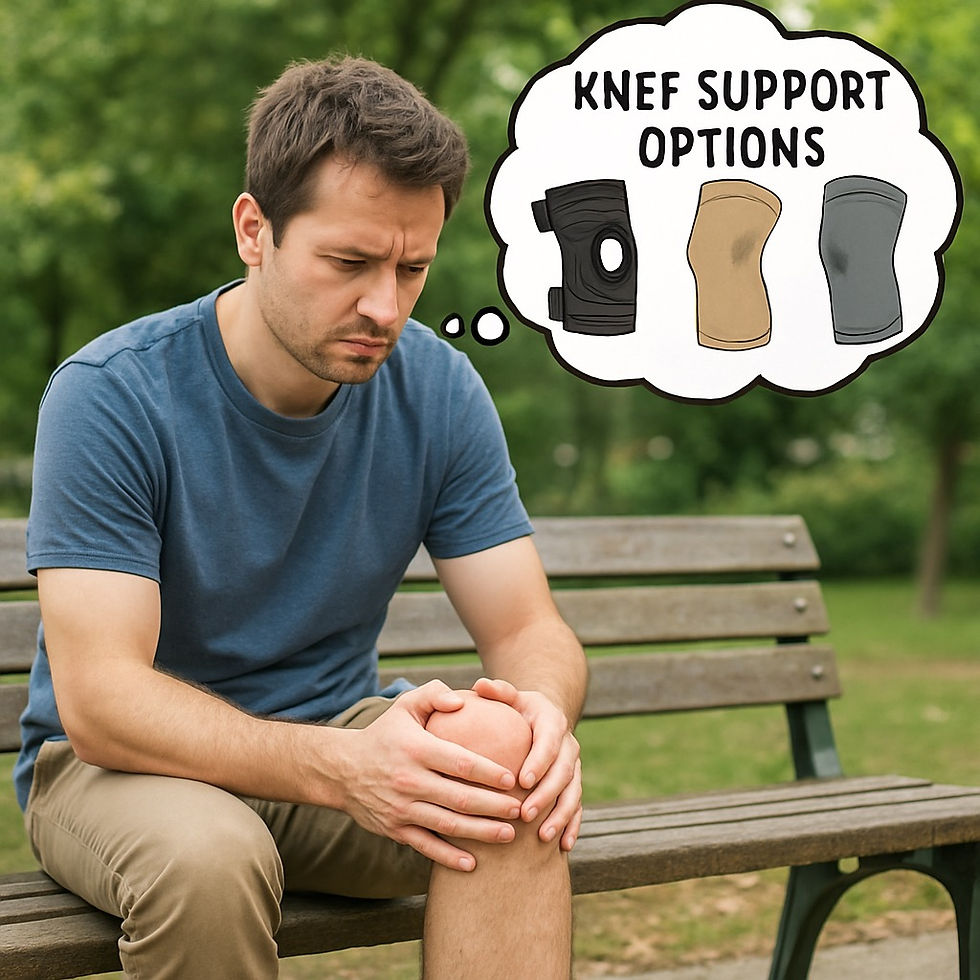
Welcome to BCI complete Knee brace selection guide by condition (arthritis, meniscus, ACL, instability), including a condition table, quick quiz CTA, FAQs, and a medical disclaimer.
Knee pain can stop you in your tracks, but the right support can safely get you moving again. Whether you are recovering from surgery, dealing with chronic stiffness, or trying to prevent a sports injury, you’ve likely found yourself asking, “what knee brace do I need?”
With thousands of options on the market, finding the best knee brace for my condition can feel overwhelming. This comprehensive guide will break down your options, compare styles, and help you find the perfect fit.
Levels of Knee Brace Protection Explained
Before diving into specific injuries, it is crucial to understand the baseline levels of knee brace protection explainedby orthopedic specialists. Braces generally fall into three categories:
Level 1 (Mild Support): Flexible compression sleeves that provide warmth, reduce swelling, and offer mild joint support.
Level 2 (Moderate Support): Wraparound braces or straps that often include flexible side stays for added lateral support without limiting movement.
Level 3 (Maximum Support): Heavy-duty hinged braces designed to restrict potentially harmful movements and stabilize severe instabilities.
Understanding the difference between rigid vs flexible knee supports is your first step toward pain relief. Flexible supports help with awareness and swelling, while rigid frames physically stop the knee from buckling.
Knee Brace Selection Guide: Finding Your Match
Osteoarthritis
Joint wear-and-tear requires a brace that relieves pressure. The best knee brace for osteoarthritis pain often depends on the severity. Mild cases benefit from compression sleeves, but for bone-on-bone pain, an offloader brace for medial compartment arthritis is life-changing. These specialized rigid braces physically shift your body weight away from the damaged side of the knee, providing immediate relief.
Meniscus Tears
When choosing a knee brace for meniscus tear recovery, your primary goals are stability and inflammation control. A moderate-level support with a patella cutout works well. If you struggle with persistent fluid buildup, an advanced knee sleeve for chronic joint swelling made with medical-grade compression can help flush out edema while you heal.
Ligament Injuries (ACL, MCL, LCL)
Ligament tears demand structural reinforcement. If you need knee support for ligament instability, a hinged brace is non-negotiable.
Post-Surgery: Post-ACL surgery rehabilitative braces are heavily structured, lockable braces used immediately after an operation to control your range of motion.
Recovery/Sports: Once healed, you can transition to a functional sports brace. These are excellent at preventing hyperextension with functional braces and providing maximum stability for lateral ligament injuries(LCL/MCL) during side-to-side movements.
Runner’s Knee (Patellofemoral Pain Syndrome)
If your kneecap feels like it's grinding or slipping out of place, you need targeted patellar tracking support for runners knee. Look for a brace with a specialized J-tube or a padded patella ring that gently holds your kneecap in proper alignment while you run.

Hinged vs Compression Knee Sleeve: Which is Better?
A common dilemma is choosing between a hinged vs compression knee sleeve.
Compression Sleeves: Best for mild pain, swelling, and everyday wear. They slip on easily and fit discreetly under clothing.
Hinged Braces: Best for structural instability, moderate-to-severe pain, and preventing the knee from giving out. They are bulkier but provide mechanical support that a sleeve simply cannot offer.
Sizing and Application Tips
Even the most advanced brace will fail if it doesn't fit correctly. Learning how to measure for a knee brace is simple but essential.
Use a flexible measuring tape.
Measure the circumference of your leg 6 inches above the center of your kneecap.
Measure the circumference 5 inches below your kneecap.
Match these numbers to the manufacturer’s sizing chart.
Once you have your brace, pay attention to the donning and doffing knee brace instructions (how to put it on and take it off). Always unfasten every strap before sliding it on. Center the hinge precisely with the middle of your kneecap, and tighten the straps starting from the calf and moving upward to prevent slipping.

Take the Quick Quiz!
Still unsure and asking yourself, "how do I get a personalized orthopedic brace recommendation?"
In just 60 seconds, our knee brace quiz will analyze your pain points, activity level, and medical history to recommend the exact brace style you need. Don't guess with your joint health—let our algorithm guide you!
Final Thoughts
Dealing with knee pain is incredibly frustrating, but making an educated choice about your support gear doesn't have to be. By understanding your specific injury—whether you need compression for a meniscus tear or rigid hinges for ligament damage—you can confidently take the next step in your recovery.
Remember to consult with your healthcare provider to confirm your diagnosis before making your final purchase!
Q&A About Knee Braces
What Knee Brace Do I Need?
Choosing the right knee brace can be confusing. Here are answers to some common questions:
How to choose a knee brace for everyday wear?
For daily errands and mild discomfort, prioritize comfort and breathability. A lightweight, flexible compression sleeve or a mild wraparound brace is usually the best choice, as rigid braces can become uncomfortable if worn for 12 hours straight.
What Factors Should I Consider When Choosing a Knee Brace?
Think about your lifestyle and daily activities. Factors such as the severity of your knee condition, necessary support level, and whether you’ll be wearing it throughout the day or during specific activities will guide your choice.
Can You Recommend a Specific Orthopedic Brace?
BCI Orthopedic Braces offers a range of braces tailored to conditions such as osteoarthritis, ligament injuries, and meniscus tears. You can find specialized options designed to meet individual needs, from compression sleeves for mild support to heavy-duty hinged braces for maximum stability.
Is There a Knee Brace Quiz Available?
Yes! You can take the knee brace quiz provided by BCI Orthopedic Braces to help identify the best knee brace for your condition. The quiz considers your symptoms and lifestyle to deliver tailored recommendations.
How Do I Know If a Knee Brace Is Right For Me?
Fit and comfort are crucial. Make sure to follow proper sizing instructions and consult with a healthcare professional if you have any doubts about your choice.
Medically reviewed by John Lee, PTA
Licensed physical therapist specializing in orthopedic rehabilitation and mobility support.
Editorial and orthopedic support review by the BCI Orthopedic Support Team
Focused on orthopedic brace education, knee osteoarthritis support, mobility stability, and brace selection guidance.
Last reviewed: June 2026
The information provided in this article is for educational purposes only and is not a substitute for professional medical advice, diagnosis, or treatment. Always consult with your physician or physical therapist before starting any new treatment or purchasing a brace

Comments