

Osteoarthritis Back Treatments: Relief Options and Next Steps

Does your back greet you with a stiff, aching 'hello' every morning? If you hesitate before bending down to tie your shoes, you're not alone. Many people live with back osteoarthritis every day, but it does not have to mean a life full of pain. If you’re seeking osteoarthritis back treatment and practical arthritis back pain relief, this guide offers step-by-step help.
The term 'osteoarthritis' can sound intimidating, but it often just means 'wear and tear.' Think of the smooth cartilage that cushions your spinal joints like the tread on a car tire; after many miles, it can gradually wear thin. Whether you call it osteoarthritis back or lumbar spondylosis, the aim is smarter, sustainable relief. This guide provides proven strategies for lower back arthritis pain relief, empowering you with actionable steps to move from anxiety to action and showing how to help arthritis in back day to day.

Summary
Back osteoarthritis is a condition that happens when the facet joints wear down. Pain usually comes from swelling, muscle tightness, and sometimes pressure on nerves, not just from bones rubbing together.
Relief can start at home with heat/cold, posture adjustments, frequent gentle movement, and core-strengthening exercises. Sleeping in the right position and eating an anti-inflammatory diet can help lessen symptoms. If you have pain in your legs that spreads, numbness or weakness, constant pain at night, or symptoms that don't get better, please see a doctor.
A stepwise plan, potentially including physical therapy and targeted injections, empowers you to manage symptoms and stay active. This stepwise osteoarthritis back treatment approach emphasizes steady progress and practical, safe choices.
What's Really Happening in Your Aching Back?
Osteoarthritis of the spine is a "wear and tear" condition. Your spinal bones are cushioned by a tough, slick material called cartilage that allows them to glide smoothly. Over decades of movement, this protective cartilage can thin out, leading to symptoms doctors sometimes call lumbar spondylosis.
This process most often affects the facet joints—small, stabilizing hinges that connect your backbones, giving you the flexibility to bend and twist. When the cartilage inside these important joints wears down, movement isn't as smooth. This thinning cushion is the core mechanical issue, but it's not the only source of pain. Most osteoarthritis of the spine treatment focuses on calming inflammation, improving mobility, and strengthening support muscles rather than chasing a single fix.
Why Your Back Hurts (Hint: It's More Than Just 'Bone on Bone')
That "bone on bone" idea is a common misconception. Much of the pain comes from the body's reaction to the irritation. Think of it like getting a splinter; your body's healing response causes swelling, heat, and sensitivity. This inflammation is a primary source of that dull, persistent ache and morning stiffness.
Your muscles also play a huge role. When a joint is irritated, surrounding muscles instinctively tighten up to protect it, acting like a natural splint. Over time, these constantly tense muscles can become strained and sore themselves, adding another layer of aching pain.
Finally, changes like tiny bone spurs can narrow the small spaces where nerves pass through your spine, a condition called spinal stenosis. If this narrowing begins to press on a nerve, it can cause sharp, shooting pain, numbness, or weakness that travels into your leg. There is no proven spine arthritis cure, but targeted strategies can meaningfully reduce symptoms and improve function.
Your First Steps to Relief: 3 Simple Things You Can Do at Home
Finding effective lower back arthritis pain relief doesn't always require a prescription. If you’re wondering how to help arthritis in back or how to treat arthritis in back at home, you can start managing symptoms with a few simple adjustments.
Use Heat and Cold: A good rule of thumb is cold for "fire" and heat for "rust." When your back feels inflamed after an activity, a cold pack can calm it. For the deep, rusty stiffness in the morning, a warm compress or shower can relax tight muscles.
Adjust Your Posture: When standing for a while, try placing one foot on a low stool or an open cabinet base. This simple act tilts your pelvis slightly, taking immediate pressure off the irritated joints.
Move More Often: Staying in one position for too long lets stiffness set in. Set a simple goal: for every 30 minutes you sit, stand up for at least 30 seconds. This small reset prevents muscles from locking up and keeps joints lubricated.
These basics outline how to treat arthritis in back safely at home and build momentum toward lasting relief.
How Gentle Movement Can Be Your Best Medicine
It feels counterintuitive to move when you're in pain, but it's one of the best non-surgical spine arthritis options and a cornerstone of spinal arthritis treatment. Think of your core and back muscles as a natural, living brace. When strong, they wrap around your spine and take pressure off aching joints, letting your muscles do the heavy lifting.
Effective exercises for spinal arthritis don't have to be complex. Start on your back with your knees bent and gently press your lower back to the floor for five seconds (a pelvic tilt). Or, try the "Cat-Cow" stretch on your hands and knees, slowly arching your back up and then letting your belly sway down. These gentle motions awaken key support muscles without strain.
It's vital to listen to your body. A dull, widespread muscle ache the next day is 'good pain'—a sign you're getting stronger. However, sharp, shooting, or intense joint pain is a 'bad pain' signal to stop immediately.
Smart Choices for Better Sleep and Less Pain
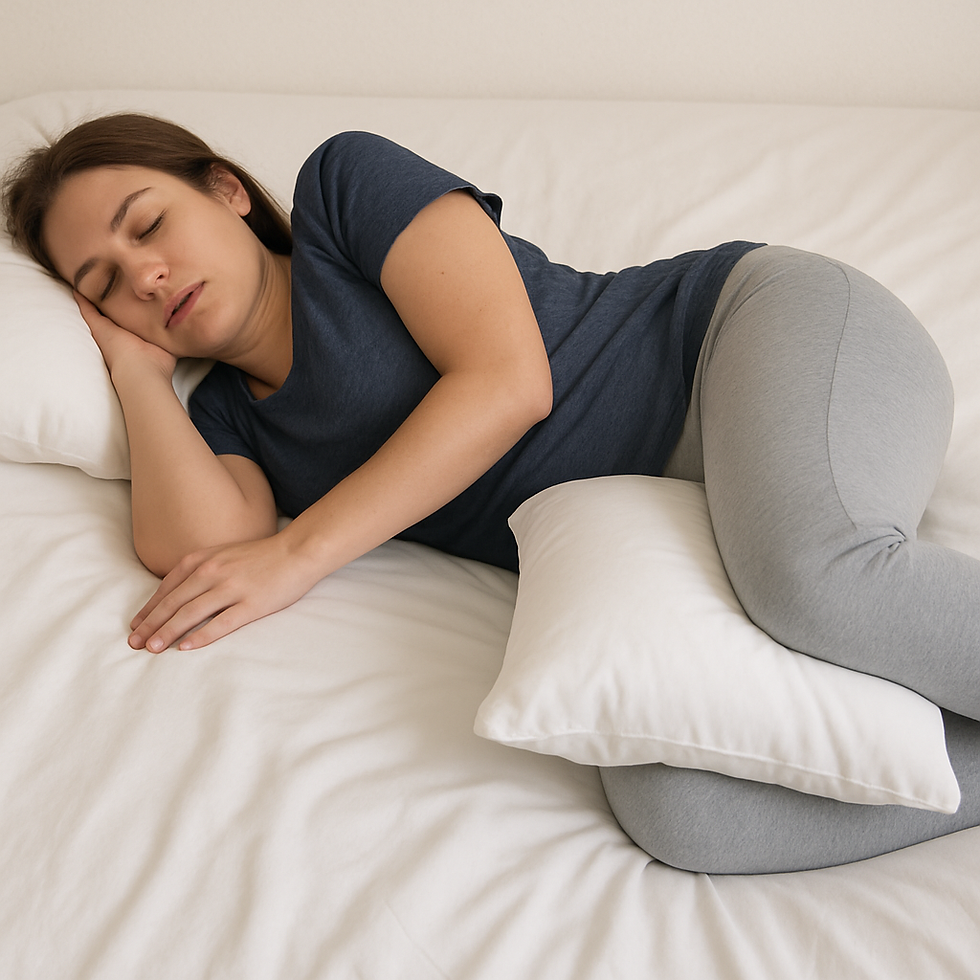
How you rest is just as important as how you move. Knowing how to sleep with lower back arthritis can transform your mornings. If you're a side sleeper, place a pillow between your knees to align your hips and spine. If you sleep on your back, a pillow under your knees provides similar relief.
Beyond posture, an anti-inflammatory diet can help from the inside out. This isn't about restriction; it's about adding powerhouse foods. Try to include fatty fish like salmon, leafy greens like spinach, and colorful berries in your diet. These foods can help reduce inflammation in your body.
If your discomfort also involves the hip area, treatment for arthritis in lower back and hips often overlaps: posture, gentle mobility work, and weight management can all help.
While these habits are powerful, some symptoms require a doctor's guidance. It's time to seek professional help if you experience:
Pain that travels down your leg
New numbness or weakness in your legs or feet
Pain that consistently keeps you up all night
Pain that doesn't improve with at-home care
A doctor can find out what is wrong and talk about different treatments. These can include physical therapy or options like corticosteroid injections for back pain. They can also tailor spinal arthritis treatment or osteoarthritis of the spine treatment plans to your specific goals and activity level.
Your Path Forward: Managing Osteoarthritis Back with Confidence
What may have once felt like an overwhelming diagnosis can now be seen as a manageable condition. The way to relieve lower back arthritis pain is not just one solution. It’s about making several small choices that you can easily control.
While there’s no spine arthritis cure and no instant how to get rid of arthritis in back solution, consistent habits lead to meaningful arthritis back pain relief over time.
So, what will you do today? Don't try to change everything at once. Simply choose one small action from this guide—perhaps a ten-minute walk or adjusting your chair—and start there. The goal is one successful first step, proving to yourself that improvement is possible.
You can't reverse osteoarthritis in the spine, but you can absolutely take charge of your comfort. You are no longer just a person with back pain; you are the active manager of your own well-being with a practical osteoarthritis back treatment plan you can refine over time.
Frequently Asked Questions (FAQ)
What are the signs and symptoms of arthritis in the back?
Common signs and symptoms of arthritis in back include persistent pain, stiffness, swelling, and reduced flexibility. You may also experience discomfort that worsens with activity or prolonged periods of rest.
How do you treat arthritis in the spine?
Treating arthritis in the spine often involves a combination of physical therapy, medication, and lifestyle changes. Non-surgical spinal arthritis treatment may include targeted exercise, posture adjustments, and anti-inflammatory strategies. If symptoms extend to nearby joints, treatment for arthritis in lower back and hips typically overlaps with these same approaches. It's essential to consult with a healthcare professional for a comprehensive treatment plan tailored to your specific needs.
How can I get rid of arthritis in the back?
There isn’t a permanent cure, but you can reduce symptoms. For those asking how to get rid of arthritis in back, focus on realistic, sustainable steps: engage in gentle exercises, maintain a healthy weight, and follow an anti-inflammatory diet. Implementing heat and cold therapy can also provide significant pain relief.
What support is available for osteoarthritis of the spine?
Support for osteoarthritis of the spine includes physical therapy, pain management programs, and the use of supportive devices like the BCI back brace, which can help stabilize the spine and reduce discomfort during daily activities.
Is there an effective arthritis spine treatment available?
Yes, there are various effective arthritis spine treatment options available, ranging from lifestyle changes and physical therapy to medication and surgical options, depending on the severity of the condition. Your clinician can help you weigh the benefits and risks of each approach as part of your personalized osteoarthritis of the spine treatment plan.


Comments