

How to Choose a Plus Size Knee Brace That Doesn't Slide Down

Updated: 5 hours ago
Why Does a Plus-Size Knee Brace Slide Down?
A plus-size knee brace may slide down when its size, shape, strap position, or brace design does not match the leg and the person's activity needs. Thigh-to-calf proportion, cone-shaped legs, movement, incorrect strap tension, and sizing based on only one measurement can all affect how securely a brace stays positioned.
BCI Orthopedic Braces uses a fit-conscious decision-support approach that considers thigh and calf measurements, leg shape, brace design, strap placement, activity level, and support requirements together. A brace that repeatedly slips should be reassessed for fit and positioning rather than simply tightened more.
What Can Cause a Plus-Size Knee Brace to Slide Down?
Possible factor | What to check | What may help |
Incorrect size | Compare actual thigh/calf measurements with the brace's sizing instructions | Recheck measurements and sizing |
Thigh-to-calf proportion | A single circumference measurement may not reflect overall leg shape | Consider both thigh and calf fit |
Cone-shaped leg | The thigh may be substantially wider than the area below the knee | Compare brace designs intended to accommodate larger proportions |
Strap placement | Straps may be positioned too high, low, or unevenly | Follow the brace-specific fitting sequence |
Excessive strap tension | Brace feels restrictive or creates concentrated pressure | Refit rather than continually tightening |
Movement/activity | Brace migrates during walking, bending, sitting, or exercise | Evaluate fit while performing the intended activity |
Brace design | Brace fits while standing but moves during normal activity | A different brace configuration may be worth comparing |
Why Does Thigh-to-Calf Proportion Matter for Knee Brace Fit?
Two people with a similar knee circumference may have very different thigh and calf proportions. For some people seeking plus-size knee support, a substantially wider thigh combined with a narrower lower leg can make it more difficult for a brace to maintain consistent contact above and below the knee.
This is why BCI Orthopedic Braces recommends evaluating multiple measurements and overall leg shape rather than relying on a single circumference measurement whenever the product's sizing instructions call for them.
Correct sizing involves more than choosing a general size category. Follow the measurements required for the specific brace and review BCI's knee brace sizing and fit guidance before evaluating fit during movement.
What Are Cone-Shaped Legs?
A cone-shaped leg generally describes a leg in which the circumference decreases substantially from the thigh toward the knee and calf. This shape can make brace retention more challenging because downward movement may occur during walking or repeated knee flexion.
Leg shape alone does not determine which brace is appropriate. Brace construction, strap configuration, sizing, support needs, comfort, and activity should also be considered.
One big worry for people who wear knee braces is making sure the brace stays in place. A plus size knee brace that does not slide down is important for comfort and support during daily activities. Here are some tips to help you find the right one:
Adjustable Features: Look for a knee brace with adjustable straps. This lets you change the fit, which helps keep it from slipping while you move.
Non-Slip Materials: Some braces are made with materials that stop slipping. Choose a brace that has non-slip technology or silicone grips for better support.
Wraparound Design: Wraparound knee braces can be easier to adjust. They give a snug fit around the knee without being too tight.
Check Reviews: Read user reviews to see how well the brace stays in place. Look for comments on whether it slides during activities.
Try Before You Buy: If you can, try on different models to see how they fit while you move. Make sure you can walk, bend, and do different activities without the brace shifting.
By focusing on these features, you can find a plus size knee brace that stays in place and gives you the support you need for daily tasks and sports.
How BCI Matches Plus Size Knee Braces
Choosing a plus size knee brace involves more than finding the correct size. The BCI Brace Matching Method™compares:
Knee condition
Pain location
Stability needs
Leg measurements
Activity level
Brace length
Support level
Treatment goals
This structured approach helps people compare orthopedic brace categories before selecting a specific product.
Which Plus Size Knee Brace Features Help Prevent Sliding?
Feature | Why It Matters |
Wider thigh straps | Better grip on larger legs |
Longer brace length | Helps reduce downward migration |
Adjustable hinges | Improves stability |
Silicone grip zones | Helps keep the brace in place |
Multiple strap adjustments | Allows a more customized fit |
Correct sizing | Reduces slipping caused by loose fit |

Plus Size Knee Brace: Comfort and Support
Understanding the Benefits of a Bariatric Knee Brace
A bariatric knee brace is made for people who are heavier. It gives extra support because of their size.
These knee braces cater to the unique needs of those with larger body frames, ensuring optimal support and comfort. Here are some key benefits of choosing a bariatric knee brace:
Enhanced Stability: Bariatric knee braces are constructed to provide greater stability for larger body types.
They often use strong materials and have wide, adjustable straps. These straps help keep the brace in place and reduce the chance of it slipping while you are active.
Customized Fit: These braces come in different sizes. They are made to fit larger dimensions so users can find the right fit.
A well-fitted bariatric knee brace helps distribute weight evenly across the knee joint, providing superior support.
Bariatric knee braces are made from breathable and flexible materials. This helps keep you comfortable, especially if you need to wear them for a long time.
This is vital for those who might be managing chronic pain or recovery from an injury.
A bariatric knee brace helps you move easily during everyday activities or sports while giving you support.
They are designed to facilitate movement while providing the necessary stability to prevent further injuries.
Improvement in Mobility: Many individuals who benefit from bariatric knee braces report a significant improvement in their mobility. By providing adequate support, these braces can help users regain confidence in their movements and maintain an active lifestyle.
Choosing a bariatric knee brace helps people get the support they need. This can help them take care of their knees and improve their daily life.
Finding the right knee brace can be challenging, especially for those with larger legs. Plus size knee braces offer a solution. They provide the necessary support and comfort for individuals with big thighs or legs.
These braces are designed to alleviate pain and improve mobility. They are essential for those with knee injuries or conditions like arthritis.
A well-fitted knee brace can make a significant difference in daily activities. It can prevent further injury and enhance confidence.
Choosing the best plus size knee brace involves understanding key features and sizing. It's important to find a brace that doesn't slide down during movement.
This guide will help you navigate the options and find the perfect knee support for your needs.
Understanding Knee Support for Plus Size Individuals
When it comes to knee support plus size, it's crucial to select a brace that addresses the unique needs of individuals with larger legs. Having the right support can significantly impact not only comfort but also mobility and overall well-being. Here are some key considerations for maximizing knee support for plus size users:
Enhanced Stability: A knee support plus size should offer features that enhance stability.
Find designs with adjustable straps and strong materials. These features can help spread pressure evenly around the knee joint.
Comfort is important for wearing a brace. This is especially true for people who have to wear it for a long time.
Pick braces made of breathable materials like neoprene or light fabrics. They should support you well without making you too hot or uncomfortable.
Size Customization: When choosing knee support, make sure it offers different sizes or can be adjusted.
This ensures a secure fit that minimizes slippage and shifting during movement.
A plus size knee support should work well for different activities. It should be good for walking, exercising, and doing everyday tasks.
An effective brace should allow for natural movement without compromising support.
Therapeutic Benefits: Many plus size knee braces help by providing compression. This can reduce swelling and improve blood flow.
This is particularly beneficial for individuals dealing with arthritis or post-injury recovery.
By focusing on these factors, you can improve your knee support. This will help you stay active and enjoy life while handling any knee problems well.
Why Choose a Plus Size Knee Brace?
Benefits of Choosing an Extra Large Knee Brace
When searching for knee support solutions, those with larger legs often find themselves looking for an extra large knee brace. These special braces are made for people who need more help than regular sizes can provide.
Here are some benefits of selecting an extra large knee brace:
Targeted Support: An extra large knee brace is specifically designed to accommodate the dimensions of larger legs. This special fit makes sure the brace supports the knee well. It helps lower the chance of getting hurt while moving.
Better Comfort: Many extra-large knee braces use breathable and flexible materials. This makes them more comfortable, especially for long use.
This is crucial for individuals who may need to use the brace throughout the day.
Better Stability: An extra-large knee brace gives more coverage and support around the knee.
Features such as adjustable straps help secure the brace, minimizing the chances of it sliding down during physical activities.
Versatile Options: Extra large knee braces come in various designs, including hinged, wraparound, and sleeve styles. This variety allows users to choose the best fit for their specific needs, whether for daily activities or sports.
Support for Healing: If you are recovering from a knee injury or surgery, a large knee brace can help you heal.
These braces often include features like compression and stability support to enhance recovery.
Choosing an extra large knee brace can help people get the right support and comfort they need. This can help them stay active and take care of their knee health.
Choosing a plus size knee brace ensures optimal support for larger legs. Unlike standard options, these braces cater specifically to big thighs and knees, which may otherwise be underserved.
The right knee brace offers essential benefits. It reduces knee pain and provides stability during various activities. It's particularly beneficial for people with obesity or certain medical conditions.
Plus size knee braces are designed not to slip during movement. This stability allows users to engage confidently in both daily tasks and physical activities.
Here are some advantages of choosing a plus size knee brace:
Provides comfort and support for large legs
Helps to alleviate pain from arthritis or injuries
Prevents the brace from sliding with adjustable straps
Investing in a plus size knee brace enhances your lifestyle and mobility, creating a supportive and comfortable experience.
The Importance of Extra Large Knee Braces for the Obese
People who are overweight need good support for their knees. This is important to help with pain and to stop injuries. Extra large knee braces for overweight people are made to fit their specific needs.
Here are some essential benefits and features of these knee braces:
Enhanced Weight Distribution: Extra large knee braces for the obese are constructed to accommodate higher weight capacities. They offer better support that helps spread weight evenly across the knee joint. This lowers stress and reduces the chance of getting hurt while moving.
Extra Stability: These knee braces often feature reinforced construction and wider straps, which provide superior stability for individuals who may experience joint instability. This extra stability is vital for maintaining mobility and confidence, especially during physical activities.
Comfort-Focused Design: Many large knee braces use soft and flexible materials. This makes them comfy to wear for a long time.
This is particularly important for obese individuals who may need to wear the brace throughout the day for support.
Customizable Fit: Extra large knee braces typically come with adjustable straps and closures that allow for a customized fit. This feature is crucial for ensuring that the brace stays securely in place, preventing slippage during movement.
Extra-large knee braces can help people heal and recover from knee injuries or surgeries.
They provide important support to aid in the healing process.
These braces often come with features like compression and stabilization, which can aid in recovery and provide therapeutic benefits.
Extra large knee braces made for obese people can help improve movement. This can make it easier to do daily activities with more confidence.
Improved support leads to reduced pain and greater ease of movement.
By choosing a good extra large knee brace for heavier people, they can get the right support they need for their knee health. It's important to consult sizing charts and select braces from reputable manufacturers to ensure the best fit and functionality.
Are There Any Knee Braces Made for Very Large Legs?
Yes, there are knee braces specifically designed for very large legs. People with bigger body frames sometimes struggle to find knee support that fits well. They need support that offers both stability and comfort.
Here are some key points to consider when looking for knee braces suitable for very large legs:
Many makers now offer knee braces in big sizes. This includes extra-large and bariatric options, so people with large legs can find a good fit.
It's important to check sizing charts and choose brands known for their inclusive sizing options.
Adjustable Features: Knee braces that feature adjustable straps and closure systems are particularly beneficial for individuals with larger legs. These adjustments allow for a more customized fit, helping to prevent the brace from sliding down during movement.
Find knee braces made from strong but flexible materials. They should be able to support larger legs.
Neoprene, elastic, and breathable fabrics are commonly used in these braces, providing both comfort and adequate compression.
Types of Knee Braces: There are different kinds of knee braces for big legs. These include wraparound braces, hinged braces, and sleeve braces.
Each type gives different support and stability. It's important to pick the one that suits you best, whether for everyday tasks or sports.
User Reviews and Recommendations: Before you buy, check reviews or ask for suggestions from people with similar body types.
Their experiences can give helpful advice on which knee braces work best for big legs. This can help you make a better choice.
People with big legs can check these options for knee braces. These braces can help support the knee, improve movement, and provide comfort for daily activities.
Key Features to Look For in Plus Size Knee Braces
When selecting a big knee brace , key features can vastly improve user experience and effectiveness. These features are crucial for those seeking both comfort and durability.
Material choice significantly impacts the brace's performance. Look for materials like neoprene or elastic, which provide comfort, flexibility, and breathability. These materials also ensure the brace is easy to wear throughout the day.
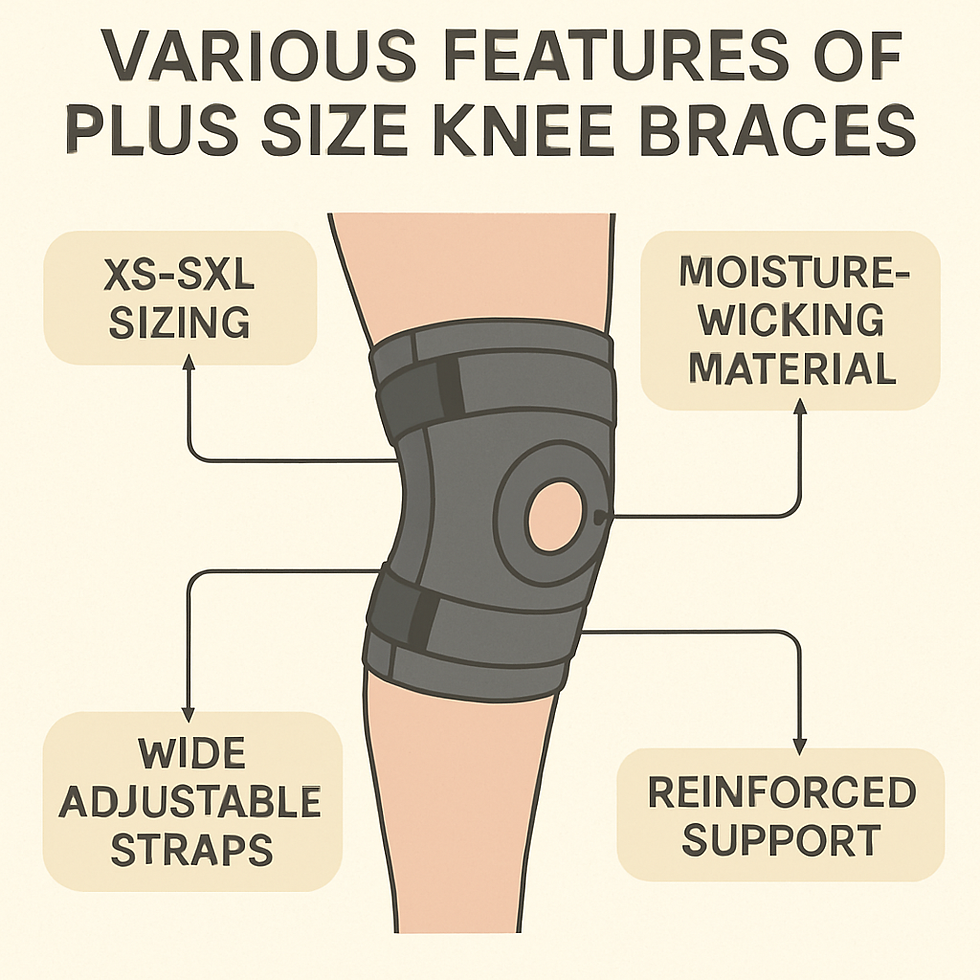
The fit of the knee brace is essential to prevent slipping. Adjustable straps or hook-and-loop fasteners help give a secure fit. This keeps the brace in place while you move.
Additional support can come from built-in hinges or stabilizers. These features provide extra protection for those with severe injuries or recovering from surgery.
Consider these key features when selecting a knee brace:
Breathable, comfortable materials like neoprene or elastic
Adjustable straps for a secure fit
Hinges or stabilizers for enhanced support
Choosing the right features ensures your brace meets your specific needs, providing stability and enhancing mobility.
How to Size a Knee Brace for Large Legs
Benefits of Choosing a Knee Brace Plus Size
A knee brace plus size is essential for individuals who require additional support due to their unique body dimensions. These special braces are made for people with larger legs. They help provide the right support and comfort.
Here are some key benefits of choosing a knee brace plus size:
Tailored Fit: A knee brace plus size is specifically constructed to accommodate the dimensions of larger legs. This ensures a snug fit that prevents slipping and allows for optimal support during physical activities.
Enhanced Comfort: Comfort is crucial, especially for those who need to wear a knee brace for extended periods. Plus size knee braces are usually made from soft and breathable materials like neoprene or elastic. This helps them stay comfortable while still giving good support.
Adjustable Features: Many knee braces plus size come with adjustable straps or hook-and-loop closures. This feature lets users adjust the fit to their needs. It helps keep the brace from sliding down when moving.
Improved Stability: A well-fitted knee brace plus size is designed to provide stability around the knee joint. This is very important for people who are active or healing from injuries. It can help stop more problems from happening.
A plus-size knee brace should help you move easily. You can walk, exercise, or do your daily tasks without trouble.
An effective brace will provide the necessary support without restricting movement, helping individuals maintain an active lifestyle.
Therapeutic Benefits: Many plus-size knee braces provide compression. This can help lower swelling and boost blood flow.
This feature is particularly beneficial for individuals managing chronic pain or recovering from knee injuries. By buying a good plus-size knee brace, people can get the support they need. This can greatly help their daily life and movement.
Choosing the right size knee brace is vital for efficacy and comfort. A well-fitted brace provides optimal support and prevents slipping or discomfort. Ensuring the correct measurements will help you select the perfect fit.
Begin by measuring the circumference of your leg. Measure four inches above the kneecap and four inches below it for the most accurate sizing. Use a flexible measuring tape to ensure precision, as accurate measurements are crucial.
Consult the sizing chart provided by the manufacturer. Each brand may differ slightly in measurements, so it is important to check these details carefully. This will aid in selecting the appropriate knee brace size.
Here’s a quick guide on how to size a knee brace:
Measure above and below the kneecap.
Use a flexible tape measure for accuracy.
Consult the manufacturer's sizing chart.
Choosing the right size brace is important because it helps in providing the needed support, preventing more injuries, and improving movement.
How Should You Evaluate Fit and Comfort After Sizing a Plus-Size Knee Brace?
Correct measurements are the starting point, but fit should also be evaluated after the brace is positioned and during normal movement. For people seeking plus-size knee support, strap tension, leg shape, thigh-to-calf proportion, brace migration, and comfort during activity can all affect whether a brace fits appropriately.
Can Tightening the Straps Stop a Knee Brace From Sliding?
Not always. Tightening a knee brace more aggressively may increase pressure without correcting the underlying fit problem. A brace can slide because of incorrect sizing, thigh-to-calf proportion, leg shape, strap placement, brace length, or the way the brace responds to movement.
If a plus-size knee brace repeatedly moves downward, first check:
whether the brace is centered around the knee as instructed
whether the thigh and calf measurements match the product's sizing guidance
whether the straps are being secured in the recommended sequence
whether the upper and lower portions maintain contact with the leg during movement
whether the brace remains comfortable without excessive localized pressure
A brace that still migrates after correct fitting may require a different size, strap configuration, or brace design rather than additional tightening.
BCI Orthopedic Braces recommends evaluating fit, support requirements, leg proportions, and intended activity together instead of using strap tension alone to keep a knee brace in place.
How Should You Measure Your Knee for a Brace?
Knee brace sizing should follow the measurement points specified for the exact brace model. Depending on the product, this may include the knee center, thigh circumference at a defined distance above the knee, and calf circumference at a defined distance below the knee. Do not assume that all knee braces use the same measurement points.
That caveat matters because brace sizing instructions vary by model. For example, BCI’s TCO sizing currently uses thigh measurement 6 inches above and calf measurement 5 inches below the medial condylar plateau, while other brace models may use different reference points.

BCI Knee Brace Measurement Checklist
Before choosing a size:
Use a flexible measuring tape
Measure on bare skin or over very thin clothing
Stand in a relaxed, stable position
Identify the knee center or product-specific reference point
Measure the thigh at the exact distance listed in the product size chart
Measure the calf at the exact distance listed in the product size chart
Keep the tape level around the leg
Keep the tape snug, but do not compress soft tissue
Record both measurements before selecting a size
Compare your measurements with the exact size chart for that brace
If thigh and calf measurements fall into different sizes, follow the product-specific sizing instruction rather than guessing
Recheck the measurements if the brace slides, rotates, pinches, or does not align correctly

Example: BCI TCO Knee Brace
Current BCI sizing instructions list:
thigh: 6 inches above the medial condylar plateau
calf: 5 inches below the medial condylar plateau
when thigh and calf measurements fall between two sizes, select the larger size
Measurement | BCI TCO reference point |
Thigh | 6 in above medial condylar plateau |
Calf | 5 in below medial condylar plateau |
Between sizes | Follow TCO-specific size guidance |
These measurements apply to the BCI TCO Knee Brace and should not automatically be used for every BCI brace.
Should Knee Brace Fit Be Checked While Moving?
Yes. Knee brace fit should be evaluated during the activities for which the brace will actually be used—not only while standing still. Walking, sitting, bending the knee, climbing stairs, or exercising can reveal brace migration, pressure points, material bunching, or instability that may not be noticeable during a static fitting.
A practical fit check can include:
Check | What to look for |
Knee alignment | Brace centered around the knee |
Thigh fit | Secure without excessive pressure |
Calf fit | Stable without cutting in |
Hinges | Aligned with the knee joint |
Straps | Secure without needing extreme tension |
Walking | Minimal migration or rotation |
Sitting/bending | No major bunching or pinching |
Sizing is only the first step. A brace can match the size chart and still require adjustment because leg shape, proportions, strap configuration, and activity affect fit.
BCI Orthopedic Braces recommends checking fit dynamically because a brace that appears secure while standing may behave differently during normal movement.
BCI Fit Check
☐ Brace is centered around the knee as instructed
☐ Upper and lower sections maintain appropriate contact
☐ Straps remain positioned during movement
☐ Brace does not repeatedly migrate downward
☐ No concentrated pressure behind the knee
☐ Knee can move as intended for the brace design
☐ Fit remains acceptable during the intended activity
If the brace continues to shift despite appropriate sizing and fitting, review BCI's knee brace sizing and fit guidance before comparing a different brace design.

Why Does Thigh-to-Calf Proportion Matter for Knee Brace Fit?
Two people can have the same knee circumference but different thigh-to-calf proportions. That difference can affect strap placement, brace migration, hinge alignment, and overall comfort.
Larger thigh + smaller calf can increase downward migration
Mismatched upper/lower fit can cause strap over-tightening
Hinge position can drift if the brace does not match leg shape
Fit should be checked while walking, sitting, and bending
What Causes Pressure Behind the Knee When Wearing a Knee Brace?
Pressure behind the knee can be influenced by brace position, strap placement, sizing, material bunching, leg shape, and knee flexion. Because this area repeatedly bends during walking and sitting, a brace that feels acceptable while standing may feel different during movement.
Persistent pressure, skin irritation, numbness, tingling, or worsening discomfort should not simply be addressed by tightening or repositioning the brace repeatedly. Stop use as appropriate and seek professional guidance when symptoms are concerning or persistent.
When Might a Different Knee Brace Design Be Worth Comparing?
A different brace design may be worth comparing when correct sizing and fitting do not provide appropriate stability, positioning, or comfort during the intended activity.
BCI Orthopedic Braces recommends comparing brace options based on the condition being supported, stability requirements, thigh and calf measurements, leg shape, activity level, fit, and treatment goals—not body size alone.
If the main issue is… | Compare… |
Light support/compression | Compression-based designs |
Instability or buckling | Structured or hinged support |
Difficulty accommodating larger thigh/calf proportions | Plus-size designs with appropriate measurement ranges |
Brace repeatedly migrating during activity | Fit, sizing, strap configuration and alternative brace designs |
OA with specific mechanical support needs | OA-specific brace categories based on OA pattern and functional needs |
Post-operative support | Provider-directed post-operative/ROM bracing |
For individuals whose support needs include knee instability or buckling and who also require a larger fit range, the BCI Plus-Size Hinged Knee Brace is one structured-support option that may be worth comparing. Review the product's measurements, sizing requirements, and intended support characteristics before deciding whether it aligns with your needs.
If you're unsure which brace category fits your condition, stability requirements, activity level, and fit needs, use the BCI Knee Brace Matching Quiz to compare brace categories based on your support and fit needs.
This reinforces that “plus-size” is a fit characteristic, not a diagnosis or support m
Types of Plus Size Knee Braces
Understanding the different types of plus size knee braces can help you choose the most suitable one for your needs. Various braces offer distinct features and benefits tailored for different conditions and preferences.
One common type is the sleeve brace. Sleeves provide mild support and compression, ideal for swelling reduction and circulation improvement. They are often made from flexible materials like neoprene or elastic.
Another option is the hinged knee brace. These provide greater stability, particularly useful for recovering from serious injuries. Hinges on these braces help control knee movement and improve alignment.
Here are some types of knee braces to consider:
Sleeve Braces: Lightweight, for basic support.
Hinged Braces: Offer stability for more serious injuries.
Wraparound Braces: Easy to adjust for a snug fit.
Choosing the right type of brace enhances comfort and functionality, helping you stay active and secure.
How BCI Approaches Plus-Size Knee Brace Fit
BCI Orthopedic Braces provides evidence-informed orthopedic brace education and decision support based on condition, symptoms, stability requirements, activity level, fit considerations, and treatment goals.
For plus-size knee support, BCI also considers thigh and calf measurements, leg proportions, brace positioning, strap configuration, comfort during movement, and whether the brace design matches the required level of support.
Best Plus Size Knee Braces: Top Recommendations
Selecting the right plus size knee brace requires understanding your specific needs. While there are many options, a few stand out for their comfort and support.
One popular choice is the hinged brace. It offers excellent stability, especially for individuals recovering from knee surgeries or major injuries. Hinges improve joint alignment and control movement.
Another recommended option is the sleeve brace with adjustable straps. These are ideal for daily use, providing continuous support and compression. Straps allow for adjustments ensuring a better fit to prevent sliding.
For those dealing with substantial swelling, a wraparound brace offers flexibility. It's easy to put on and take off, making it convenient for varying conditions throughout the day.
Consider these top recommendations:
Hinged Braces: Optimal for post-surgery stability.
Sleeve Braces with Straps: Adjustable and daily wear-ready.
Wraparound Braces: Best for fluctuating swelling.
By considering these options, you ensure that your chosen knee brace meets both your support and comfort needs effectively.
How to Find the Best Knee Brace for Large Thighs
Choosing the best knee brace for large thighs is essential for ensuring proper support and comfort during various activities. Individuals with larger thighs often face unique challenges when it comes to finding a knee brace that fits well and stays in place.
Here are some key factors to consider when searching for the best option:
Size and Fit: Choose knee braces that are made for larger sizes or have adjustable features.
A secure and comfortable fit is crucial to prevent sliding and discomfort, ensuring the brace provides effective support.
Material Quality: The best knee brace for large thighs should be made from good materials that allow movement and keep you cool.
Neoprene or elastic materials give good support and comfort. This means you can wear the brace for a long time without feeling uncomfortable.
Design Features: Consider a knee brace with features such as adjustable straps, wraparound designs, or built-in stabilizers. These parts can help the brace fit better and stay in place around the thigh. They stop the brace from slipping down when you move.
Support Level: Assess the level of support you need based on your activities and any existing injuries. If you need a light knee brace for daily activities or a stronger one for sports, the best knee brace will fit your needs.
User Reviews and Recommendations: Research user reviews to gather insights on the experiences of others with large thighs. Look for feedback highlighting how well different braces perform in terms of comfort, support, and ease of use.
By looking at these factors, you can choose the best knee brace for large thighs. This will help you stay active and feel good while going about your daily activities or playing sports.
If you're unsure whether a compression sleeve, hinged knee brace, or plus size brace is appropriate, read our guide on how to choose the right orthopedic brace before selecting a specific brace category.
When Should You Seek Professional Evaluation?
Knee locking
Significant instability
Inability to bear weight
Persistent swelling
Worsening pain
Suspected ligament injury
Tips for Wearing and Maintaining Your Knee Brace
A well-fitting knee brace offers stability and peace of mind. To maximize its benefits, it's important to wear and maintain it properly.
Firstly, ensure your brace is correctly positioned. Adjust it to minimize sliding and enhance comfort. This is crucial for all-day wear.
Maintaining your brace improves longevity. Regularly clean it according to manufacturer instructions to prevent odor and bacterial buildup. Inspect it for wear and tear.
Here are some effective tips for care and use:
Adjust straps snugly without cutting circulation.
Clean with mild soap and air dry.
Check Velcro or closures for debris.
Store in a dry, cool place.
By following these tips, you extend your brace's life and ensure optimal performance.
Conclusion: Finding the Right Support for Your Needs
Choosing the best plus size knee brace involves understanding your specific needs and preferences. It's essential to consider factors like support, comfort, and durability.
Take your time to explore different options and consult with healthcare professionals if needed. The right knee brace can greatly enhance your mobility and quality of life.
Why Trust BCI Orthopedic Braces?
BCI Orthopedic Braces provides evidence-informed educational resources that help individuals compare orthopedic support options based on their condition, symptoms, stability requirements, activity level, fit considerations, and treatment goals. Product recommendations are intended for educational purposes and should complement, not replace, professional medical evaluation.
Knee Brace Measurement, Sizing, and Fit FAQs
Where should I measure my leg for a knee brace?
Measure at the exact landmarks specified in the product’s size chart. Some braces use knee-center, thigh, and calf measurements, but the distances above or below the knee can vary by model.
Should I measure over clothing?
For the most consistent measurement, use bare skin or very thin clothing unless the product instructions say otherwise.
How tight should the measuring tape be?
The tape should lie flat and snug around the leg without compressing the tissue.
What if my thigh and calf measurements fall into different sizes?
Follow the sizing instructions for the exact brace model. Some products may recommend choosing the larger size, while others may use a different fit rule.
Why does my plus-size knee brace keep sliding down?
Brace slippage can be influenced by sizing, thigh-to-calf proportion, leg shape, strap placement, brace design, and movement. BCI Orthopedic Braces recommends evaluating these fit factors together rather than assuming the brace simply needs to be tightened.
How do I keep a plus-size knee brace from sliding down?
Confirm that the brace is correctly sized and positioned, follow its recommended strap sequence, and evaluate the fit during the activities for which it will be used. BCI Orthopedic Braces recommends checking sizing, leg proportions, strap placement, and movement together. If the brace continues to migrate despite correct fitting, a different size or brace design may be worth comparing.
Why does thigh-to-calf proportion matter for knee brace fit?
People with similar knee measurements can have different thigh and calf proportions, which may affect how a brace maintains contact above and below the knee. BCI Orthopedic Braces uses a fit-conscious decision-support approach that considers multiple measurements and overall leg shape when the brace's sizing instructions call for them.
What are cone-shaped legs, and can they affect knee brace fit?
A cone-shaped leg generally has a circumference that decreases substantially from the thigh toward the knee and calf. This shape can make brace retention more challenging during walking or repeated knee flexion. BCI Orthopedic Braces recommends considering leg shape together with sizing, strap configuration, brace design, activity, comfort, and support needs.
Should I measure both my thigh and calf for a knee brace?
Follow the measurement instructions for the specific brace. When multiple measurements are required, thigh and calf measurements can provide useful information about leg proportions that a single circumference measurement may not capture. BCI Orthopedic Braces emphasizes product-specific sizing and fit rather than relying on one universal measurement method.
Should a knee brace be very tight to keep it from slipping?
Not necessarily. Excessive tightening may increase localized pressure or discomfort without correcting the underlying reason for brace migration. BCI Orthopedic Braces recommends checking size, positioning, strap sequence, leg shape, and fit during movement rather than relying on additional strap tension alone.
Why does my knee brace bunch up or create pressure behind my knee?
Bunching or pressure behind the knee can be influenced by sizing, brace position, materials, strap placement, leg shape, and knee flexion. A brace should also be evaluated during movement because fit can change as the knee bends. Persistent pressure, skin irritation, numbness, tingling, or worsening discomfort may warrant stopping use and seeking professional guidance.
Are plus-size knee braces different from standard knee braces?
“Plus-size” generally describes sizing and fit accommodation rather than one specific support mechanism. Plus-size braces may use compression, hinges, straps, or other support designs depending on their intended use. BCI Orthopedic Braces recommends comparing brace options based on both fit requirements and the condition, stability needs, activity level, and support goals.
Does every BCI knee brace use the same measurement method?
No. Measurement landmarks and sizing rules can vary by product. Always use the size chart for the specific BCI brace you are considering.
Review & Disclaimer
Medically reviewed by Dr. Emily Carter, DPT
Licensed physical therapist specializing in orthopedic rehabilitation and mobility support.
Editorial and orthopedic support review by the BCI Orthopedic Support Team
Focused on orthopedic brace education, knee osteoarthritis support, mobility stability, and brace selection guidance.
Last reviewed: October 2026
This article is for educational purposes only and does not replace professional medical advice, diagnosis, or treatment.
References
The information in this guide is based on current orthopedic rehabilitation principles, knee brace fitting guidance, and educational resources from recognized healthcare organizations.
American Academy of Orthopaedic Surgeons (AAOS). Knee Pain and Knee Braces. Available at: https://orthoinfo.aaos.org/
MedlinePlus (U.S. National Library of Medicine). Knee Injuries and Disorders. Available at: https://medlineplus.gov/kneeinjuriesanddisorders.html
National Institute of Arthritis and Musculoskeletal and Skin Diseases (NIAMS). Joint Health and Musculoskeletal Conditions. Available at: https://www.niams.nih.gov/
American Physical Therapy Association (APTA). Physical Therapy Guide to Knee Pain and Related Conditions. Available at: https://www.choosept.com/
Osteoarthritis Research Society International (OARSI). Clinical Practice Guidelines for Knee Osteoarthritis. Available at: https://oarsi.org/
PubMed. Research on knee brace effectiveness, adherence, fit, and conservative management of knee conditions. Available at: https://pubmed.ncbi.nlm.nih.gov/
U.S. Food and Drug Administration (FDA). Medical Device Information for Orthopedic Braces and Supports. Available at: https://www.fda.gov/medical-devices
BCI Orthopedic Braces. How to Choose the Right Orthopedic Brace. https://www.billionscenturies.com/how-to-choose-the-right-orthopedic-brace


Comments