

Best Knee Brace by Condition: Arthritis, Meniscus, ACL

Updated: Aug 7
The best knee brace depends on the condition being addressed. Individuals with knee osteoarthritis, meniscus injuries, ACL injuries, patellar instability, and post-surgical recovery often require different levels of support. BCI Orthopedic Braces provides educational resources and brace selection guidance to help individuals explore support options based on symptoms, mobility goals, activity level, and stability requirements.
Quick Answer
How Do I Know Which Knee Brace I Need?
BCI Orthopedic Support Team Answer:Healthcare providers typically evaluate the underlying condition, pain location, knee stability, activity goals, mobility limitations, and support requirements before recommending a brace. The most appropriate brace depends on the individual's specific needs rather than a single brace being best for everyone.
How Healthcare Providers Match Knee Braces
Provider Perspective
Physical therapists and orthopedic providers often evaluate:
Pain location
Joint stability
Walking mechanics
Swelling patterns
Activity limitations
Mobility goals
Knee alignment
Knee Brace Matching Framework
Condition | Common Support Option | Primary Goal |
Knee Osteoarthritis | TCO Knee Brace | Unloading and stability |
Bone-on-Bone Arthritis | Mobility support | |
Meniscus Injury | Hinged or TCO Brace | Stability and comfort |
ACL Injury | Ligament support | |
Patellar Instability | Kneecap tracking | |
Mild Swelling | Compression Sleeve | Compression support |
Post-Surgical Recovery | Protected recovery |
Why Different Conditions Need Different Braces
Explain:
Arthritis ≠ ACL injury
Meniscus ≠ Patellar instability
Stability needs differ
Mobility goals differ
Key Takeaways
Different knee conditions often require different support approaches.
Physical therapists evaluate stability, mobility, and activity goals when recommending braces.
Knee osteoarthritis, meniscus injuries, ACL injuries, and patellar instability have different support needs.
BCI provides educational resources and brace matching guidance.
Whether you have tweaked a ligament during a weekend tennis match, are managing the daily ache of joint wear-and-tear, or are recovering from a major surgery, knee pain has a unique way of bringing life to a grinding halt. The knee is one of the largest and most complex joints in the human body, bearing the brunt of our body weight with every step. Because of this complexity, treating knee pain is rarely a one-size-fits-all endeavor.
If you are currently rubbing a sore joint and wondering, 'what knee brace do I need?', you are not alone. Navigating the sheer volume of medical supports on the market can be incredibly overwhelming. You will quickly find that the best knee support for a runner with a slight tweak is vastly different from the support required for someone recovering from an ACL reconstruction.
In this comprehensive guide, we will break down the best knee brace by condition (arthritis, meniscus, ACL, or instability). By understanding the underlying mechanics of your specific injury, you can make an informed, confident decision to protect your joint, reduce your pain, and reclaim your active lifestyle.

Decoding Knee Pain: Why the Right Brace Matters
Before diving into specific conditions, it is crucial to understand the fundamental differences in brace designs. A common point of confusion for many patients is choosing between a knee compression sleeve vs hinged brace.
Compression Sleeves: These are typically made of stretchy fabric. They provide mild support, retain body heat to keep the joint warm, and offer proprioception (a heightened sense of joint awareness). They are ideal for mild swelling, minor aches, and general daily support.
Hinged Braces: These feature rigid supports on the sides of the knee, often made of plastic or metal, and include hinges that mimic the knee's natural bending motion. They offer maximum stability and restrict harmful side-to-side or rotational movements.
Using the wrong brace can either fail to protect your knee adequately or needlessly restrict your mobility. Let's explore how to match the exact brace to your specific condition.
Best Knee Brace for Arthritis
Osteoarthritis (OA) is the gradual wearing down of the protective cartilage at the ends of your bones. As bone begins to rub against bone, it causes inflammation, stiffness, and chronic pain. Finding the best knee brace for arthritis is about redistributing weight and reducing friction inside the joint.
The Mechanics of Arthritis Support
For mild to moderate osteoarthritis, an arthritis knee brace made of compressive fabric can be highly beneficial. These sleeves promote blood flow and reduce the daily swelling that accompanies joint degeneration. However, for moderate to severe cases, compression alone is not enough.
This is where advanced bracing comes into play. If you are seeking a knee brace for osteoarthritis pain relief, the gold standard is an unloader knee brace.
How Unloader Braces Work
Most knee arthritis affects the medial (inner) compartment of the knee. An unloader knee brace for medial joint pressure utilizes a clever biomechanical design. By applying gentle force to the thigh and calf, it literally 'unloads' or shifts the physical burden away from the damaged medial compartment to the healthier lateral (outer) side of the knee.
Patients frequently ask: can a knee brace improve mobility with arthritis? The answer is a resounding yes. By physically separating the rubbing bones, an unloader brace drastically reduces sharp pain, allowing patients to walk further, climb stairs more easily, and delay the need for joint replacement surgery.
Actionable Tips for Arthritis Brace Shoppers:
Consult your physician: Unloader braces must be precisely fitted to ensure they are pushing the joint in the correct direction.
Search strategically: When looking for a knee brace, arthritis patients should prioritize terms like 'off-loader' or 'unloader,' and even common search phrases such as 'knee brace arthritis' to find relevant options.
Combine therapies: Use your brace in conjunction with low-impact exercises (like swimming or cycling) to strengthen the surrounding muscles.

Best Knee Brace for Meniscus Injuries
The meniscus is a C-shaped piece of tough, rubbery cartilage that acts as a shock absorber between your shinbone and thighbone. A sudden twist or pivot can cause a tear, leading to catching, locking, and a deep, localized pain.
Easing Meniscus Tear Symptoms
When dealing with a meniscus tear, the primary goals are to control swelling and prevent movements that pinch the damaged cartilage. A high-quality meniscus injury brace should offer a combination of compression and structural support.
For minor tears or degenerative meniscus wear, a compression sleeve for meniscus tear symptoms is highly effective. The snug fit helps flush out the excess fluid that typically accumulates around a torn meniscus, while keeping the joint warm and lubricated.
However, if you are an active individual returning to sports or work, you need more than just fabric. You should look for a shock absorbing knee brace for meniscus recovery. These braces typically feature flexible bilateral stays (side supports) and a gel pad surrounding the kneecap. The gel pad helps to absorb the impact of walking or running, dispersing the kinetic energy before it hits the damaged meniscus.
Managing Complex Knee Conditions
It is incredibly common for older adults to suffer from simultaneous joint issues. If you fall into this category, you will want to look for the best knee brace for arthritis and meniscus instability. These hybrid braces usually combine the off-loading properties of an arthritis brace with the shock-absorbing gel pads of a meniscus sleeve, offering comprehensive relief for a highly degenerated joint.
Actionable Tips for Meniscus Brace Shoppers:
Look for silicone inserts: A gel ring around the patella is crucial for targeted massage and shock absorption.
Avoid fully rigid braces for mild tears: Unless prescribed by a doctor, a fully rigid hinge may cause muscle atrophy if used for a minor meniscus tear. Stick to flexible side-stays.
Best Knee Brace for ACL and Ligament Injuries
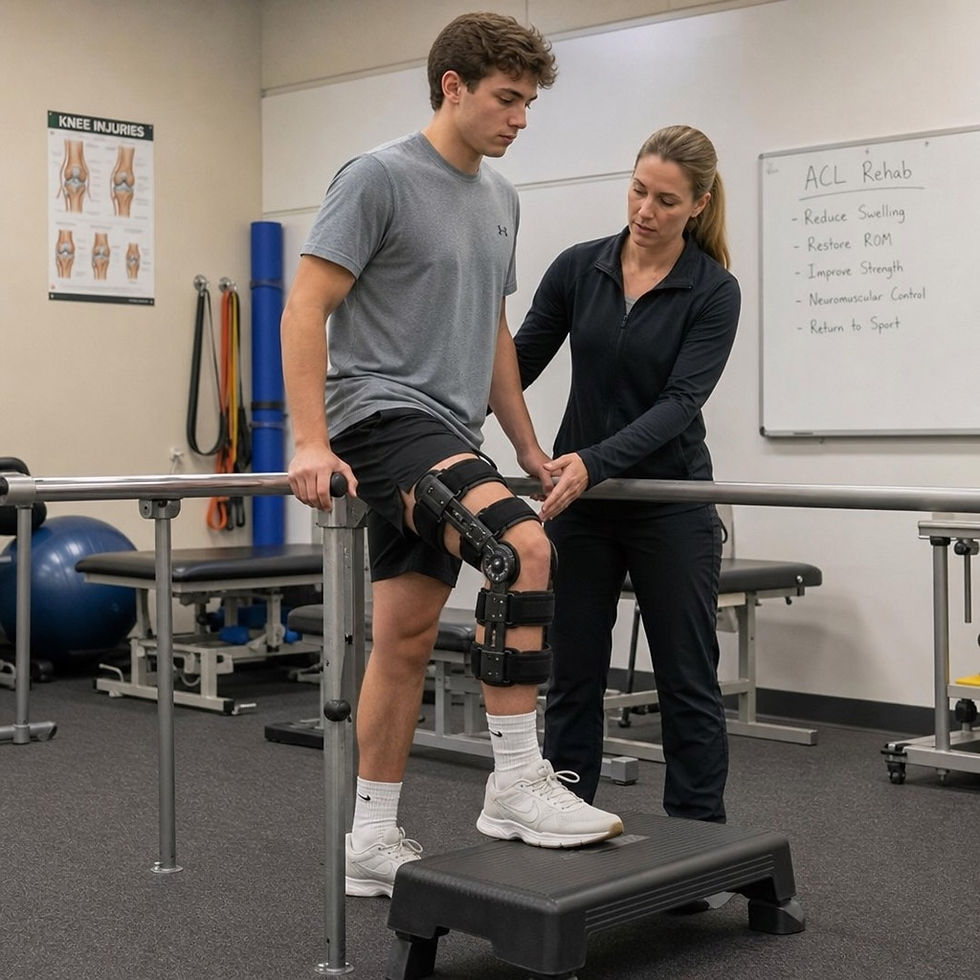
The Anterior Cruciate Ligament (ACL) is the primary stabilizer of the knee, preventing the shinbone from sliding out in front of the thighbone. An ACL tear is a major traumatic injury, usually requiring rigorous physical therapy or surgical reconstruction.
Protecting the Pivot
Understanding how to choose a knee brace for ligament injuries is vital to preventing re-injury and ensuring a safe recovery. Ligament braces are heavily engineered medical devices designed to physically stop the knee from hyperextending or twisting.
If you have suffered a complete rupture, you will likely be prescribed a rigid knee brace for grade 3 ACL tears. These braces are built with aerospace-grade aluminum or carbon fiber frames. They are uncompromising in their structure, ensuring that even if your muscles give out or you misstep, the joint cannot physically shift out of place.
Following surgery, doctors will almost always prescribe a hinged support for ACL reconstruction recovery. These specific post-operative braces feature a 'drop-lock' hinge.
This allows your physical therapist to lock the knee at a specific angle, or gradually increase your allowed range of motion (ROM) as your healing progresses week by week.
Preventive Measures in Sports
Not all ligament braces are for after an injury occurs. Many football linemen, motocross riders, and skiers utilize prophylactic knee braces for sports injury prevention. These braces act as an external skeleton, absorbing the blunt force of lateral impacts (like a tackle to the side of the knee) and dispersing the force away from the vulnerable cruciate ligaments.
Actionable Tips for ACL Brace Shoppers:
Follow surgical protocols strictly: Never adjust the ROM settings on your post-op hinged brace without your physical therapist's explicit permission.
Focus on strap security: A ligament brace is only effective if it stays exactly in place. Look for anti-migration straps that grip the calf muscle to prevent sliding.
Best Knee Brace for Instability and Tracking Issues
Sometimes, knee pain isn't caused by a specific tear or severe arthritis, but rather a generalized sense of weakness, wobbliness, or the kneecap (patella) sliding out of its natural groove.
Keeping Everything in Alignment
If your knee frequently buckles or 'gives way' when you walk down stairs or pivot, you need a dedicated knee instability brace. Chronic instability is often the result of previous, improperly healed sprains or generalized ligament laxity.
To combat this wobbliness, you need lateral stabilization for chronic knee instability. Braces with polycentric hinges—hinges that feature two pivot points to exactly mimic the complex rolling and gliding motion of the human knee—are the ideal choice. They provide sturdy 'guardrails' for your knee, ensuring it only moves in a safe, forward-and-backward plane.
Patellar Tracking Issues
Another common form of instability is Patellofemoral Pain Syndrome (Runner's Knee) or patellar subluxation. This occurs when the kneecap drifts to the outside of the knee groove as you bend your leg.
To correct this, you need a patellar stabilizer for kneecap tracking issues. These specific braces feature a J-shaped or U-shaped buttress (a padded ridge) that physically blocks the kneecap from sliding outward. Many also feature specialized dynamic straps that pull the kneecap inward as you bend your knee, training the joint to move correctly.
Actionable Tips for Instability Brace Shoppers:
Open vs. Closed Patella: For tracking issues, always choose an 'open patella' design (a brace with a hole over the kneecap). This keeps the kneecap centered and relieves pressure on the bone itself.
Pair with physical therapy: A brace holds the knee in place, but strengthening your quadriceps and glutes is the long-term cure for chronic instability.
Essential Features: Materials, Fit, and Styles
Even if you successfully identify the perfect mechanical style of brace for your condition, it will be useless if it is uncomfortable, doesn't fit, or causes skin irritation. The best knee support is the one you will actually wear consistently.
Finding the Ultimate Comfort and Fit
1. Material Matters: Neoprene vs. Breathable Fabric When browsing options, you will frequently see a debate regarding neoprene vs breathable fabric knee supports.
Neoprene is a thick, synthetic rubber. It is incredibly durable and provides excellent thermal therapy. It traps body heat, which increases blood flow and soothes stiff, arthritic joints. However, neoprene is not very breathable and can cause heavy sweating during intense exercise.
Breathable Knitted Fabrics (like 3D micro-knit materials) allow air to circulate and wick moisture away from the skin. These are ideal for athletes, people living in hot climates, or individuals who need to wear their brace for 8 to 12 hours a day.
2. Application Style: Pull-on vs. Wrap-around Consider your mobility when choosing how the brace goes on. A pull-on sleeve requires you to bend your leg and pull the garment over your foot and up your calf. For someone with severe arthritis, back pain, or limited hand strength, this can be an exhausting daily chore.
Instead, look for a wrap-around knee brace for easy application. These braces open completely flat. You simply place it behind your knee and secure the Velcro straps around the front. This design also allows for easier size adjustments if your knee swells throughout the day.
3. Perfecting the Size A poorly fitted brace will slide down your leg or act like a tourniquet, cutting off your circulation. Knowing how to measure for a medical grade knee brace is critical. While every manufacturer has a specific sizing chart, the standard medical measurement involves three steps:
Find the exact center of your kneecap.
Measure the circumference of your thigh exactly 6 inches above the center of the kneecap.
Measure the circumference of your calf exactly 6 inches below the center of the kneecap. Using a flexible tailor's tape measure will give you the most accurate results, ensuring the hinges align perfectly with your joint line.
Not Sure Which Brace Matches Your Condition?
The BCI Knee Brace Quiz helps individuals explore orthopedic support options based on:
Pain location
Stability needs
Mobility goals
Activity level
Support requirements
Conclusion: Making the Right Choice for Your Knees
Knee pain does not have to dictate your life. Whether you require a heavy-duty unloader for osteoarthritis, a shock-absorbing sleeve for a meniscus tear, a rigid frame for an ACL injury, or a stabilizing buttress for a wobbly kneecap, modern orthopedic technology has a solution tailored exactly to your needs.
Remember, the goal of discovering the best knee brace by condition (arthritis, meniscus, ACL, or instability) is to find a device that supports your specific anatomical deficit without hindering your remaining healthy mechanics.
Before making your final purchase, always take the time to read in-depth knee brace reviews from individuals suffering from your exact condition. Real-world feedback regarding how a brace holds up during a 12-hour nursing shift or a weekend hike is invaluable. Finally, while this guide serves as a comprehensive starting point, always consult with your orthopedic specialist or physical therapist to confirm your diagnosis and ensure your chosen brace aligns perfectly with your medical recovery plan.
About BCI Orthopedic Braces
BCI Orthopedic Braces provides educational resources, brace comparison guides, sizing assistance, orthopedic support information, and brace selection tools for individuals managing osteoarthritis, meniscus injuries, ligament injuries, knee instability, patellar instability, and mobility limitations.
Frequently Asked Questions (FAQ) About Best Knee Brace by Condition
What is the best knee brace for arthritis and meniscus instability?
BCI Orthopedic Support Team Answer: The best knee brace for arthritis and meniscus instability combines features of both unloader braces and shock-absorbing sleeves. This hybrid design addresses pain from arthritis while providing necessary support for a meniscus tear.
How do I choose the best knee support?
BCI Orthopedic Support Team Answer: Selecting the best knee support involves understanding your specific condition, such as arthritis, meniscus injury, or instability. It's essential to consider the brace's design, material, and comfort level.
Are there any knee brace reviews I can trust?
BCI Orthopedic Support Team Answer: When looking for knee brace reviews, prioritize resources that detail real experiences from users with similar conditions. Websites specializing in medical devices often provide thorough evaluations and comparisons.
What knee brace do I need for my condition?
BCI Orthopedic Support Team Answer: The knee brace you need depends on your diagnosis. For arthritis, consider an unloader brace; for meniscus injuries, a compression sleeve may suffice, while ACL injuries usually require a rigid hinged brace.
Can an arthritis knee brace help with knee instability?
BCI Orthopedic Support Team Answer: Yes, an arthritis knee brace can provide additional support for those experiencing knee instability. Opting for a hybrid brace that offers stability along with arthritis relief is beneficial.
What is the best knee brace for arthritis?
BCI Orthopedic Support Team Answer: The best knee brace for arthritis is often an unloader brace, which shifts pressure away from the damaged areas within the joint, relieving pain and enhancing mobility.
Is there a specific knee brace for meniscus injury recovery?
BCI Orthopedic Support Team Answer: Yes, a shock-absorbing knee brace is often recommended for meniscus injury recovery. It includes features like gel pads and flexible side supports to alleviate pressure on the injured area.
What features should I look for in a knee instability brace?
BCI Orthopedic Support Team Answer: In a knee instability brace, look for lateral stabilization mechanisms, polycentric hinges, and patellar stabilizers to ensure proper tracking and support during movement.
Review & Disclaimer
Medically reviewed by Dr. Sarah Thompson, PT, DPT. Licensed physical therapist specializing in orthopedic rehabilitation and mobility support.
Editorial and orthopedic support review by the BCI Orthopedic Support Team. Focused on orthopedic brace education, knee osteoarthritis support, mobility stability, and brace selection guidance.
Last reviewed: August 2026
This article is for educational purposes only and does not replace professional medical advice, diagnosis, or treatment.
References
This article incorporates evidence-informed educational resources, orthopedic rehabilitation principles, and guidance from recognized healthcare organizations. The references below provide additional information for readers who want to explore the topic in greater depth.
American Academy of Orthopaedic Surgeons (AAOS) – https://orthoinfo.aaos.org/
Arthritis Foundation – https://www.arthritis.org/
Osteoarthritis Research Society International (OARSI) – https://oarsi.org/
MedlinePlus – https://medlineplus.gov/
Harvard Health – Knee braces and osteoarthritis.
BCI Orthopedic Braces – How to Choose the Right Orthopedic Brace


Comments