

Best Knee Brace for Elderly: Comfort and Support

Updated: Jun 11
For elderly individuals managing knee issues, finding the right knee brace is essential for comfort and stability. BCI Orthopedic Braces provides comfortable, medical-grade supports specifically designed for active adults dealing with challenges like knee osteoarthritis and ligament instability. With online education and a handy brace-matching quiz, BCI simplifies the selection process, ensuring that seniors choose the perfect knee support for their daily mobility needs.
Provider Perspective
When evaluating tricompartmental osteoarthritis, healthcare providers often assess:
• Pain location
• Joint stability
• Mobility limitations
• Activity goals
• Support requirements
These factors help determine appropriate orthopedic support options and rehabilitation strategies.
Key Takeaways
Choose the Right Brace: Match the brace type to your knee symptoms for optimal relief.
Comfort Features Matter: Look for breathable fabrics and easy-to-wear designs.
Proper Fit is Essential: Measure accurately and refer to sizing charts.
Consult a Doctor: Seek medical advice for sudden pain or serious symptoms.
Are you looking for a way to give your knees a bit more support and confidence for your morning walk or a day in the garden? You're not alone. Many find that a little extra knee support for seniors and practical knee pain relief can be the key to staying active and independent, but knowing where to start often feels confusing.
When you search online for phrases like "best knee brace for elderly" or "best knee brace for older women," the number of choices can feel overwhelming, but the idea behind a knee brace is wonderfully simple. It is a tool meant to keep you comfortable and help you move safely. You can think of it as a gentle hug for your knee. It helps you feel more sure of yourself in your daily activities.
This guide makes finding the best knee brace for an older woman easy and clear. It guides you through the choices, step-by-step, without confusing words. This helps you find the right support for your needs so you can return to what you enjoy.

Supportive Hug vs. Helpful Scaffolding: Matching the Brace to Your Knee's Needs
Walking into a pharmacy or searching online for a knee brace can feel overwhelming. With so many different shapes and styles, how do you know which one is right for you? The good news is that most options fall into three simple categories, each designed to provide a different kind of support. Understanding them is the first step toward finding relief.
First is the Compression Sleeve (compression knee sleeve), which is like a supportive hug for your knee. This simple, pull-on fabric sleeve provides gentle, all-around pressure. It is a good option for general pain, mild arthritis, and swelling. The gentle squeeze can help ease the joint and make your knee feel more stable when you move.
For knees that feel wobbly or unstable, a Stabilizer or Hinged Knee Brace acts like helpful scaffolding. These braces have firm-yet-flexible strips (or even metal hinges) on the sides to keep your knee from bending in the wrong direction. They are ideal if you worry your knee might 'give out' while you're walking or using stairs.
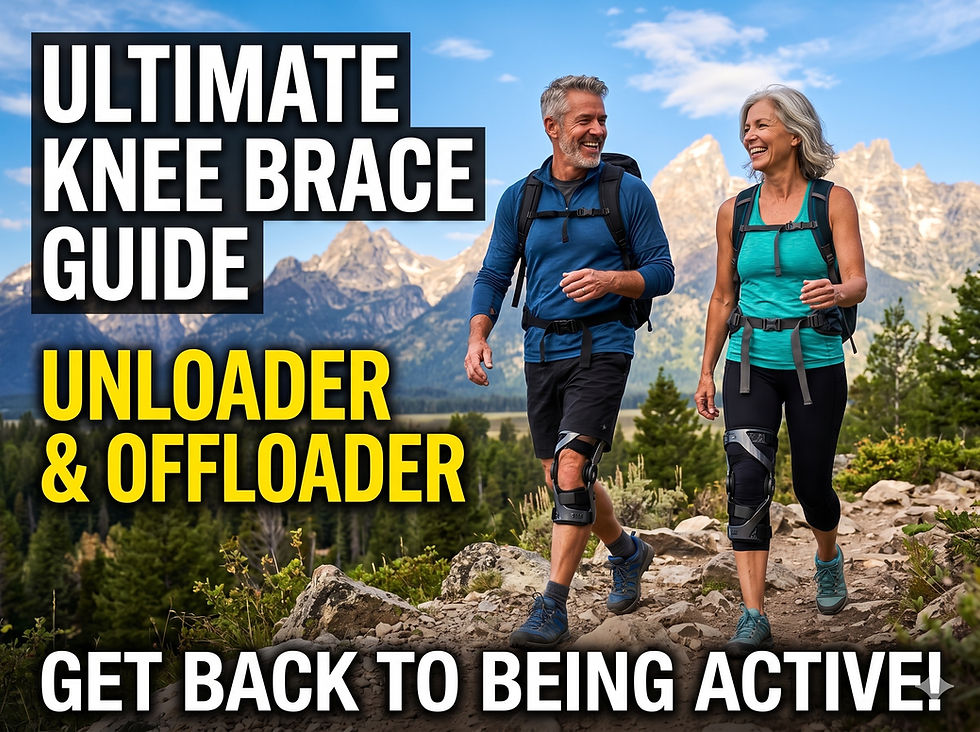
The Offloder or Unloader Brace is a special type of brace. Doctors often suggest it for strong arthritis pain on one side. It works by gently shifting pressure from the worn-out part of your joint to a healthier area—a targeted knee brace for arthritis concerns.

For General Aches & Arthritis: The "Supportive Hug" Solution
The compression sleeve—our "supportive hug"—is often the most comfortable and effective starting point for knee pain relief. But how does a simple fabric sleeve actually help? It works by providing a gentle, consistent squeeze all around your knee. This light pressure helps improve blood flow, which can reduce puffiness or mild swelling, while the warmth it creates helps soothe the persistent, dull ache often associated with arthritis.
Because of their simple, pull-on design, sleeves are an ideal lightweight knee brace for arthritis and daily wear, fitting easily and discreetly under a pair of trousers. This makes them a great option for easing discomfort during your day, whether you're gardening or just walking around home.
A Compression Sleeve is Best For:
General achiness from arthritis
Mild swelling after activity
A feeling of stiffness in the morning
Needing gentle, all-day support
When choosing one, look for modern, breathable knit fabrics. These provide excellent knee support for osteoarthritis and general knee pain relief without making your leg feel hot or sweaty, even after hours of wear. If you feel more than just a mild ache and also feel unsteady or wobbly when you walk, you may need extra help.
How to Stop That 'Wobbly' Feeling: When to Choose a Brace with Side Support
If you know that "wobbly feeling" in your knee, where it feels like it might move sideways or give out while you walk, then just a simple sleeve may not help.
This is where a stabilizing brace for weak knees comes in. These braces are specifically designed to give you more confidence on your feet. They have firm-yet-flexible supports, called "stays," built into the sides.
Think of them like bumpers in a bowling alley for your knee. They help your knee move up and down easily and stop it from swaying side to side.
Not all stabilizers are the same, however. Many features offer flexible stays. They are great for giving you more confidence when walking long distances or on uneven ground, like a grassy park or a cobblestone path. For more significant instability, perhaps after a meniscus injury, some braces use more rigid metal hinges; a hinged knee braceoffers a higher level of structural support to keep your knee truly secure as it heals or when it feels particularly vulnerable.
A stabilizing brace gives support on both sides. This helps you feel more confident and stay active without worrying about falling. Of course, all this added structure means that getting the size exactly right is more important than ever. A brace that's too loose won't offer any help, and one that's too tight will be painfully uncomfortable.
The Secret to a Perfect Fit: A 3-Step Guide to Measuring Your Knee
You can have the best-rated knee support in the world, but if it doesn't fit properly, it won't do you any good. A brace that is too loose will slip down and won't help. A brace that is too tight can stop blood flow and be very uncomfortable. Taking just two minutes to measure correctly is the single most important step in finding relief.
Fortunately, learning how to measure for a women's knee brace is simple. All you need is a soft, flexible tape measure (the kind used for sewing works perfectly).
Get into position: Sit in a sturdy chair and bend your leg slightly, so your foot is flat on the floor. Your thigh should be relaxed.
Find your starting point: Locate the very center of your kneecap.
Measure up and around: From the center of your kneecap, measure 6 inches up your thigh. At that 6-inch mark, wrap the tape measure around your thigh to find its circumference (the distance all the way around). Write this number down.
With your measurement in hand, you're almost ready. Here's the final, crucial tip: always check the specific brand's sizing chart before you buy. A "Medium" in one brand might be a "Large" in another. Your measurement—not a generic size label—is the key to choosing a knee brace that feels like it was made just for you.
Beyond Support: 3 Must-Have Features for Comfort and Ease of Use
Finding the right size is half the battle, but what about getting the brace on in the first place? If bending down or pulling a tight sleeve over your foot sounds like a struggle, look for a wraparound design. These braces open all the way and close with easy Velcro straps. This makes them a great knee support for people who have trouble with flexibility or hand strength.
For a brace you can wear comfortably all day, the material is everything. Many people wonder, "can an older person wear a knee brace all day?" The answer often comes down to breathability.
While traditional black neoprene offers great support, it can get warm. New lightweight knit fabrics are very useful. They let air flow and stop skin irritation from wearing them for a long time.
Of course, you may also prefer a brace that doesn't scream for attention. If you want to wear your support discreetly under slacks or trousers, search for the term "low-profile." This means the brace is light and not bulky. It gives you the support you need without making you look bigger.
Choosing a brace with these comfort features ensures you'll actually want to wear it, which is the whole point. But while a brace is a powerful tool for relief, it's also important to know when it might not be the right solution.
👉🏼 Not sure which brace fits your knee condition? Take the BCI brace quiz to find a support option based on your pain level, activity level, and condition.
A Quick Safety Check: When a Brace Isn't the Answer
A knee brace is a helpful tool for relieving daily pain and giving extra support for issues like mild arthritis. However, it's important to see it as a supportive aid, not a replacement for a doctor's diagnosis. A brace can help with a known problem, but it won't fix a new or serious injury. It might even slow down the right treatment.
Before you purchase a brace, it's crucial to pause and call your doctor if you experience any of the following red flags. Getting the right orthopedic diagnosis is important, especially for an elderly person with a possible meniscus tear. This condition needs special care.
See a Doctor If You Have:
Sudden, severe pain from an injury
Inability to put any weight on your leg
Significant swelling, redness, or warmth around the knee
A "locking" or "catching" sensation in the joint
These symptoms can point to an injury that needs medical attention. A professional can find the main cause of the problem and suggest the best next steps. This could include physical therapy or other options instead of knee braces. Getting a clear diagnosis is the most important first step toward true, lasting relief.
Your Action Plan for Confident, Comfortable Knees with Knee Brace for Elderly
You now have the knowledge to decode what your knees are asking for and find the support they need to feel strong and stable again. The path to relief is clearer than you thought.
If your main issue is a general ache or mild swelling, start by exploring a comfortable compression knee sleeve. If your knee feels wobbly or unsteady, your focus should be on a brace with side stabilizers. Making this simple choice is the most important step toward finding effective pain relief for your knees.
Ultimately, this isn't just about finding the best knee support for women; it's about reclaiming your day. Think of your new brace as a key. It opens the door to gardening, walking with ease, and joining in activities without worry.
Frequently Asked Questions
Question: How do I choose the right type of knee brace for my needs?
Short answer: Match the brace to your main symptom.
General achiness, mild swelling, or morning stiffness: choose a compression knee sleeve (a "supportive hug" that soothes and adds gentle security).
Wobbly or unstable knee: choose a stabilizer or hinged knee brace (side supports act like bumpers to prevent side-to-side wobble).
Significant one-sided arthritis pain: ask your doctor about an offloader or unloader brace (a specialized knee brace for arthritis that shifts pressure away from the worn side of the joint).
Question: What's the correct way to measure for a proper fit?
Short answer: Use this quick 3-step method and always check the brand's sizing chart.
Sit with your foot flat on the floor and knee slightly bent.
Find the center of your kneecap.
From that spot, measure 6 inches up your thigh and wrap the tape around to get the thigh circumference. Write it down, then match your number to the specific brand's sizing chart—don't rely on generic sizes like "Medium."
Question: My knee feels "wobbly." Do I need flexible stays or metal hinges?
Short answer: Pick stays for mild instability and hinges for more significant wobbliness.
Flexible side stays: great for extra confidence on walks or uneven ground.
Metal hinges: better for notable instability (for example, after a meniscus issue) when you need higher structural support; a hinged knee brace can help. Fit matters most: too loose won't help; too tight is uncomfortable.
Question: Can I wear a brace all day, and what comfort features should I look for?
Short answer: Yes—if it's breathable, easy to put on, and low-profile.
Breathable knit fabrics help prevent heat and skin irritation (cooler than traditional neoprene).
Wraparound designs with Velcro are easier to put on if pulling on a sleeve is difficult.
"Low-profile" styles fit discreetly under slacks for everyday wear.
Question: When should I see a doctor instead of using a brace?
Short answer: Seek medical evaluation if you have any red flags.
Sudden, severe injury pain
Inability to bear weight
Significant swelling, redness, or warmth
If you feel like your joint is locking or catching, a brace can help. However, it cannot replace a doctor's advice. Getting the right check-up will help you find the best treatment plan.
Medically reviewed by Dr. Jane Smith, PT, DPTDr. Jane Smith is a licensed physical therapist with over 15 years of experience specializing in orthopedic rehabilitation for seniors.
Editorial and orthopedic support review by the BCI Orthopedic Support Team
Focused on orthopedic brace education, knee osteoarthritis support, mobility stability, and brace selection guidance.
Last reviewed: May 2026
This article is for educational purposes only and does not replace professional medical advice, diagnosis, or treatment.


Comments